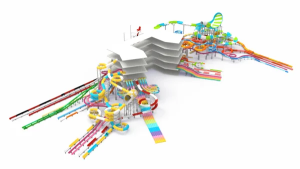
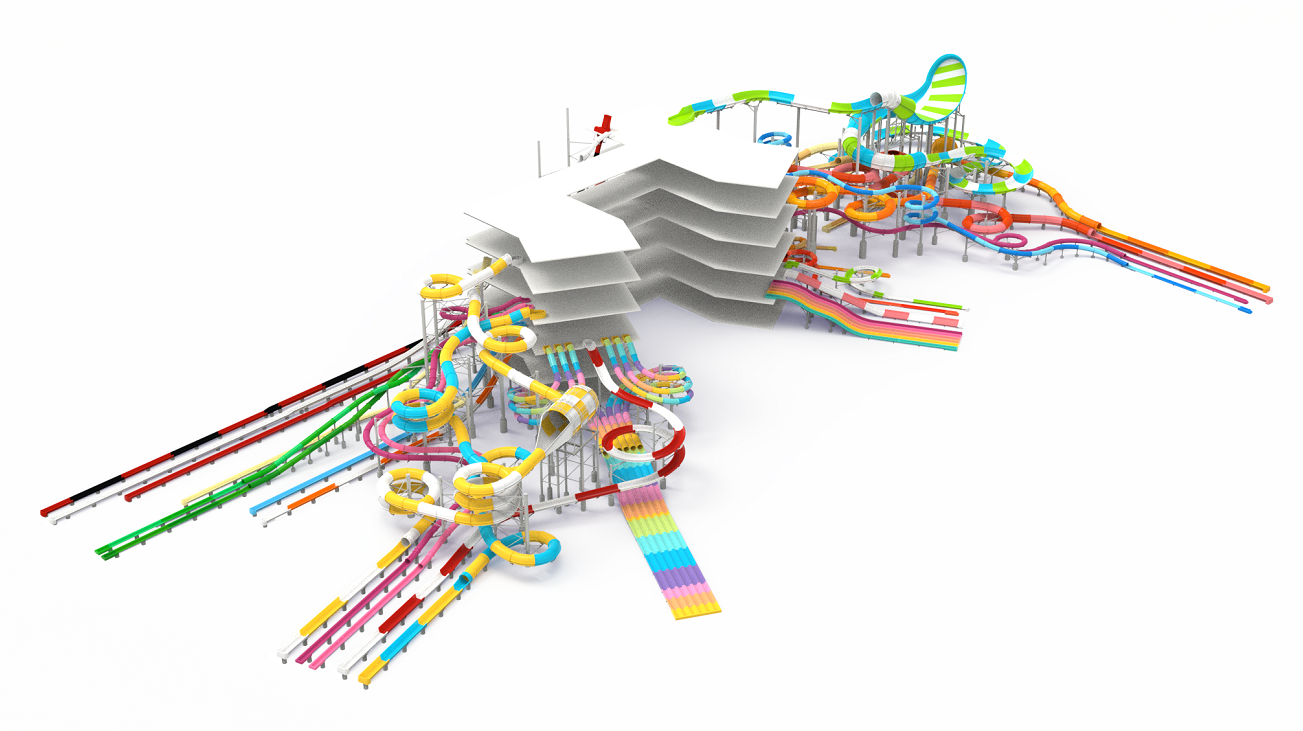
Large resort water parks have to serve different visitors at the same time. Children need accessible play, families need shared experiences, thrill seekers expect stronger attractions, and the resort itself needs recognizable features that distinguish the destination. A random collection of rides can make these demands compete for space. A layered plan instead connects attractions into a coherent guest journey, with capacity, circulation, and operations considered from the beginning.
Start with Layers, Not a Shopping List
A large water park should be organized around experience levels and visitor needs before individual equipment is selected. Industry guidance emphasizes determining the target market, park scale, expected demand, and attraction mix during the planning stage rather than treating equipment procurement as a separate decision.
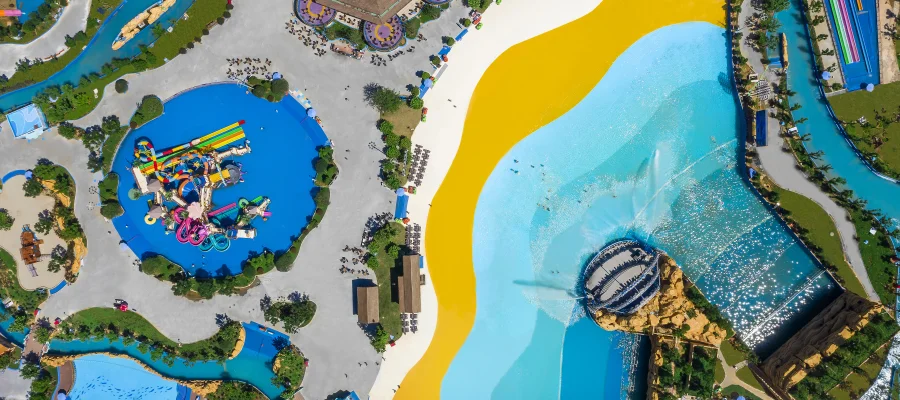
We approach water park equipment as interconnected components within a master plan. Basic water-play areas can welcome younger visitors, while family attractions create spaces for parents and children to participate together. Higher-energy slides can then serve thrill-oriented guests, with signature attractions providing a memorable focal point for the entire resort.
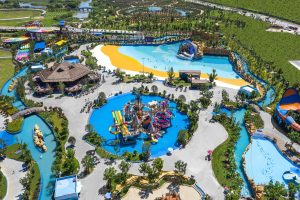
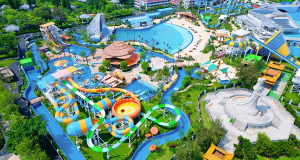
This layered structure also helps distribute visitors. When several attraction categories are positioned within connected zones, demand does not have to concentrate around one headline ride. Circulation, queue areas, service access, and supporting facilities can be considered alongside attractions, creating a more practical environment for daily operation.
Build a Strong Basic Water-Play Layer
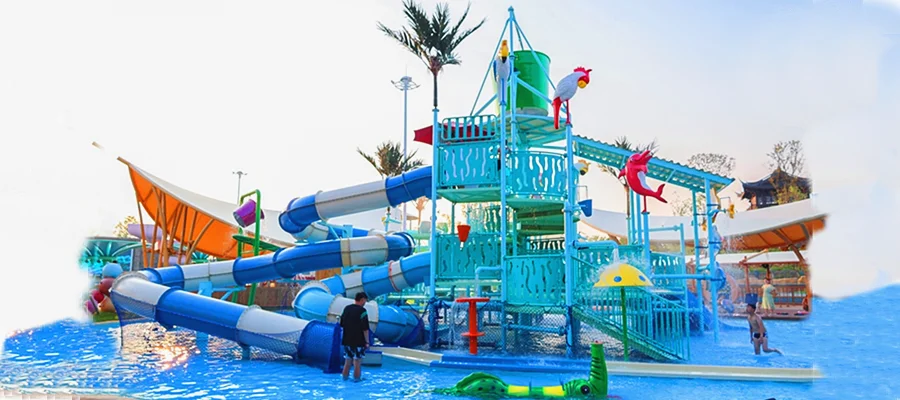
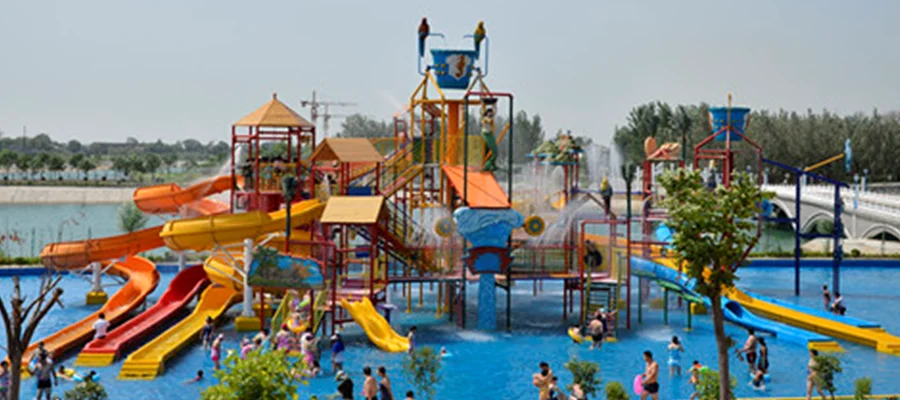
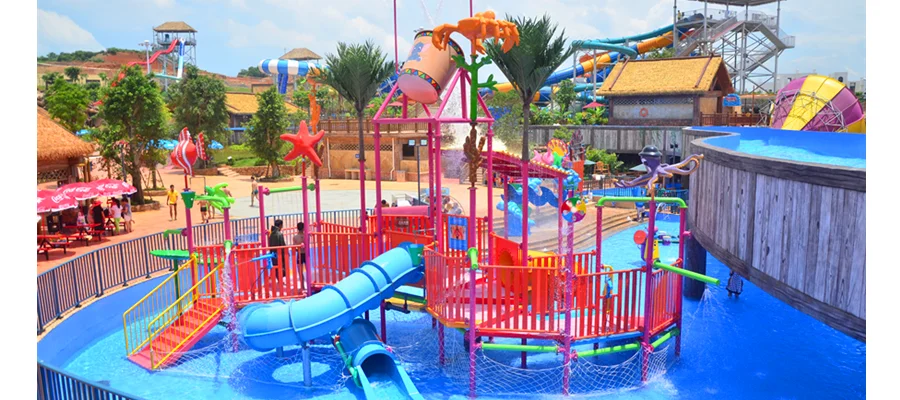
The first layer should make the park approachable. Interactive water houses, children’s play areas, shallow-water activities, and smaller slides can provide frequent participation without requiring every visitor to seek a high-thrill experience.
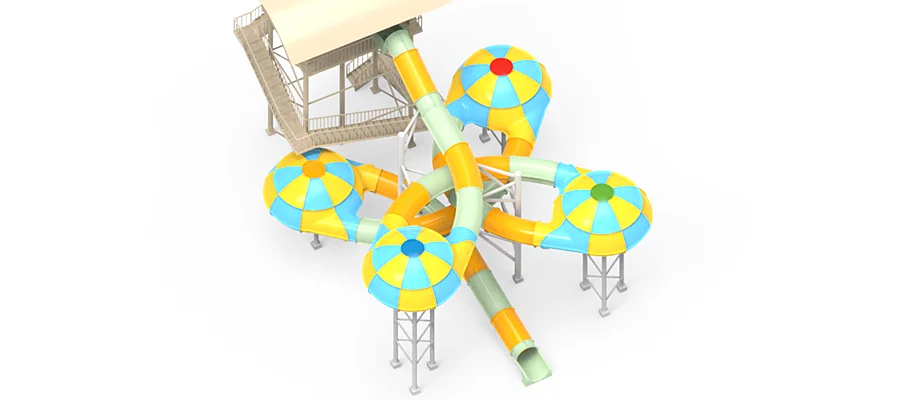
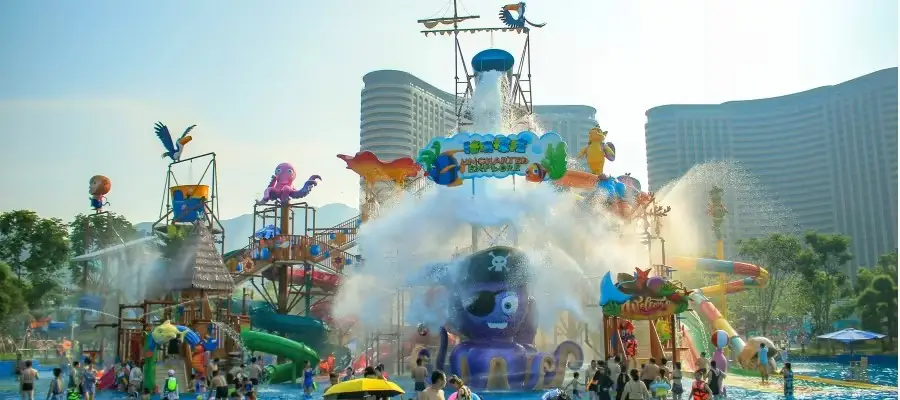
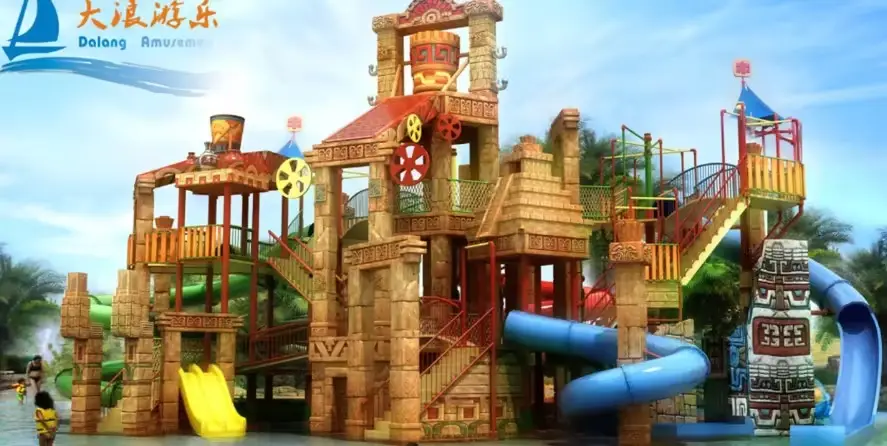
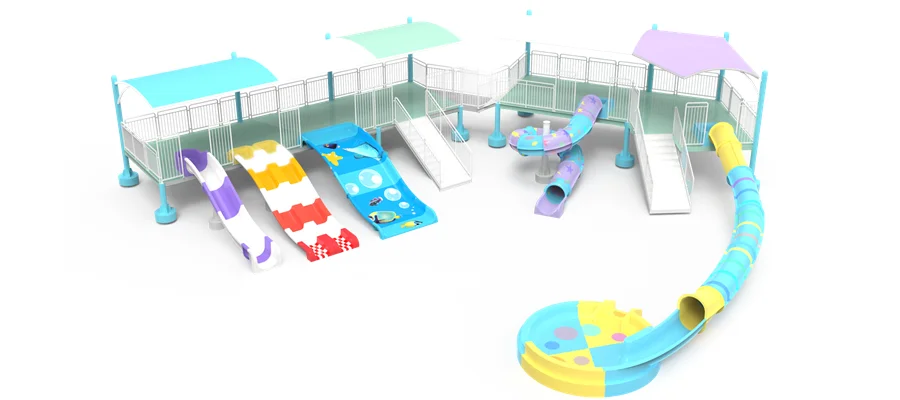
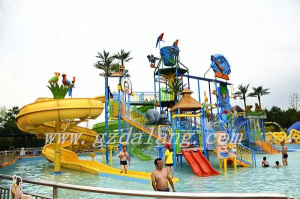
Our Amazon Style Water Park illustrates how multiple activities can be combined into one themed environment. The Amazon Water House uses a tropical rainforest concept and combines differently shaped slides with colorful interactive water features. Its listed configuration is 29 × 25 × 14 meters, covers about 850 square meters, and includes six slides.
This type of combination can become more than a children’s attraction. We can coordinate it with surrounding family facilities, circulation routes, and larger attractions so that younger guests have their own active zone while adults remain connected to the broader resort experience.
Add Family Attractions as the Connecting Layer
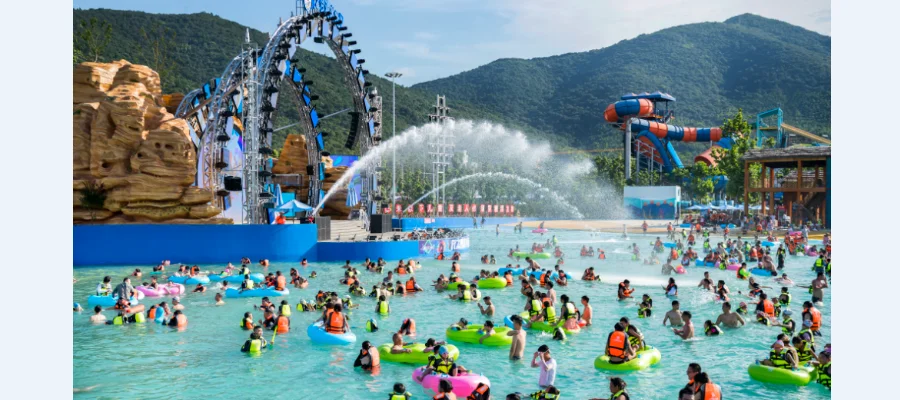
Family attractions can bridge basic play and high-thrill experiences. Wave pools, family raft slides, lazy rivers, and larger interactive structures can accommodate groups with different preferences and encourage visitors to move through several areas during one visit.
The objective is not simply to increase the quantity of water park equipment. Each attraction should have a role in the overall layout. A high-capacity communal attraction can help absorb visitors, while nearby family attractions provide alternative activities when queues develop elsewhere.
This approach also matters when evaluating water park project cost. A project budget should be considered alongside land use, infrastructure, circulation, installation, and operational requirements. The initial equipment price alone does not represent the resources required to develop and operate a large resort water park.
Create a Dedicated Thrill Layer
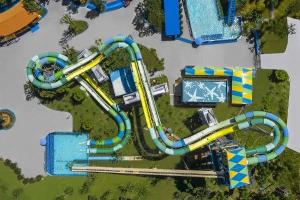
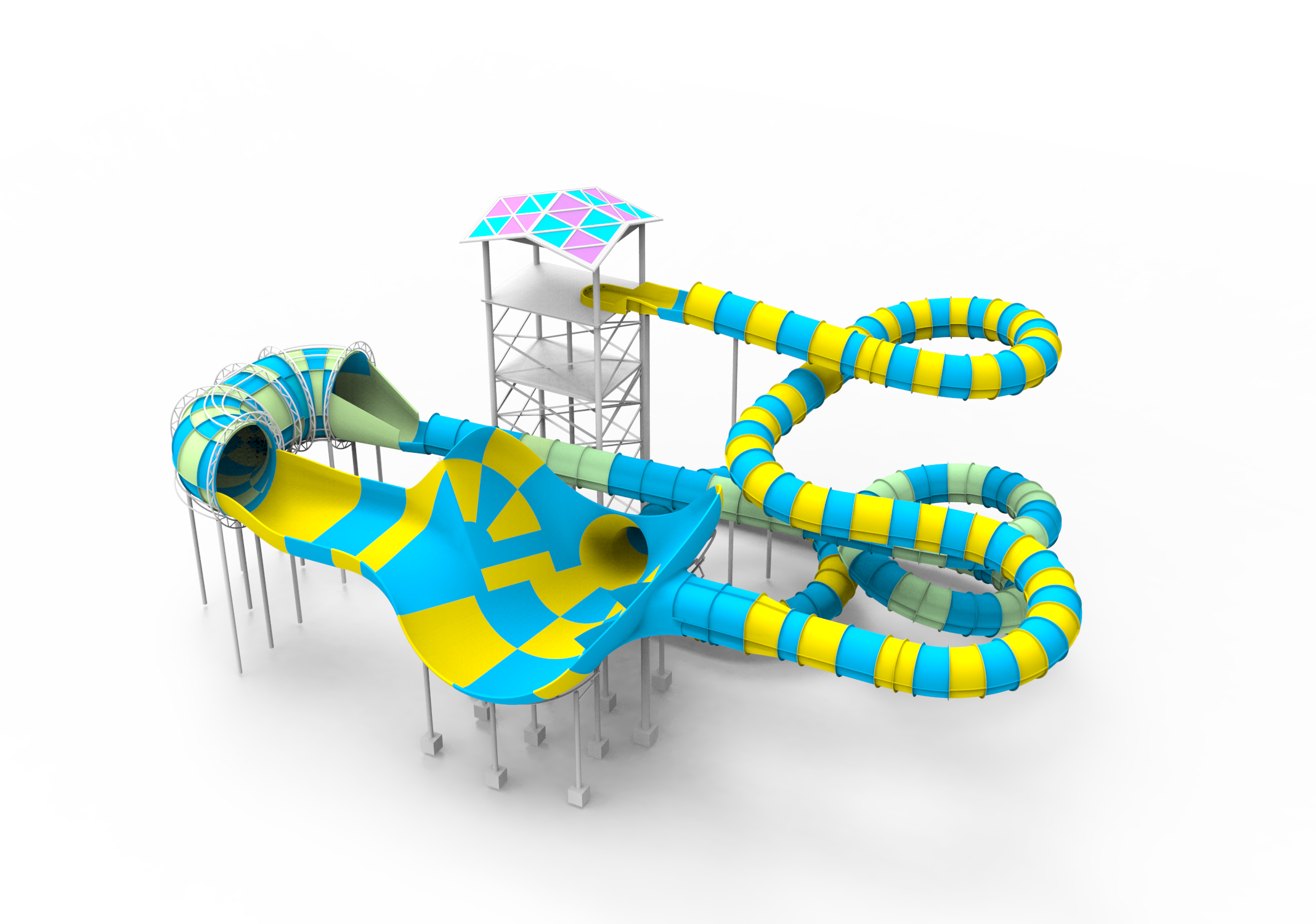
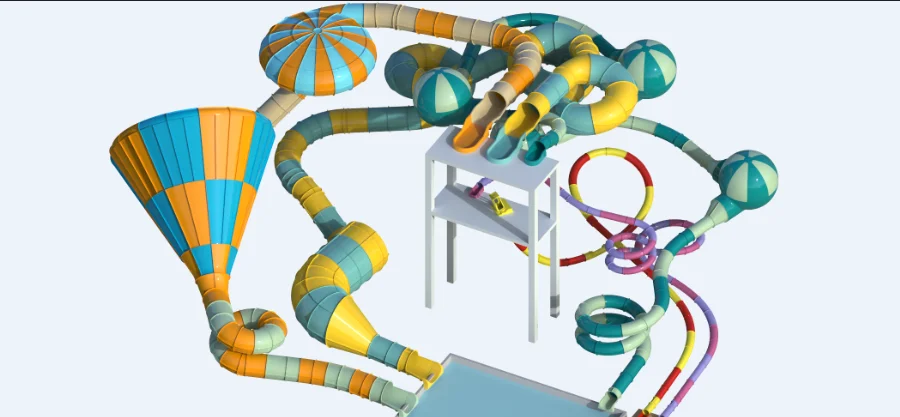
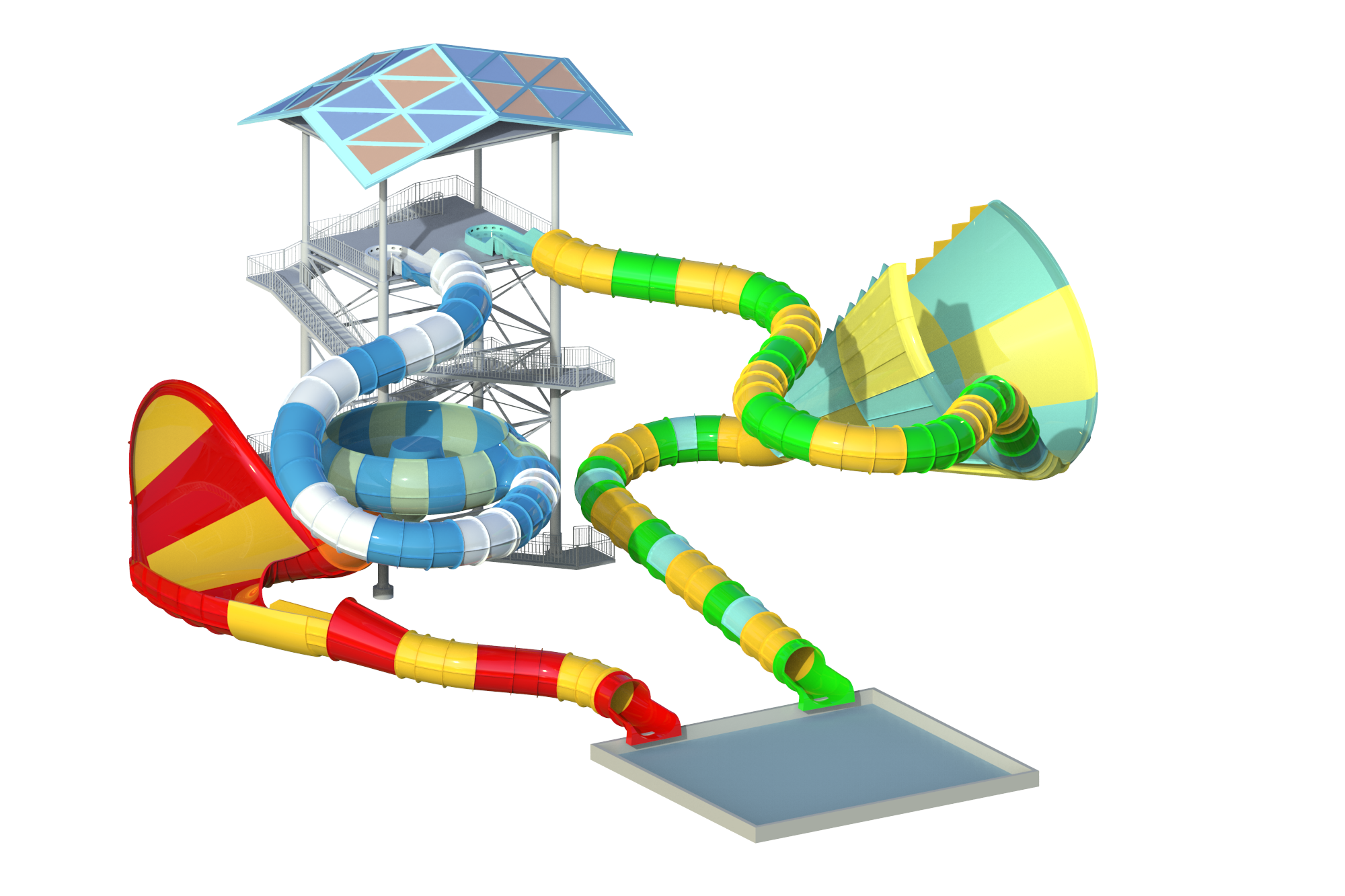
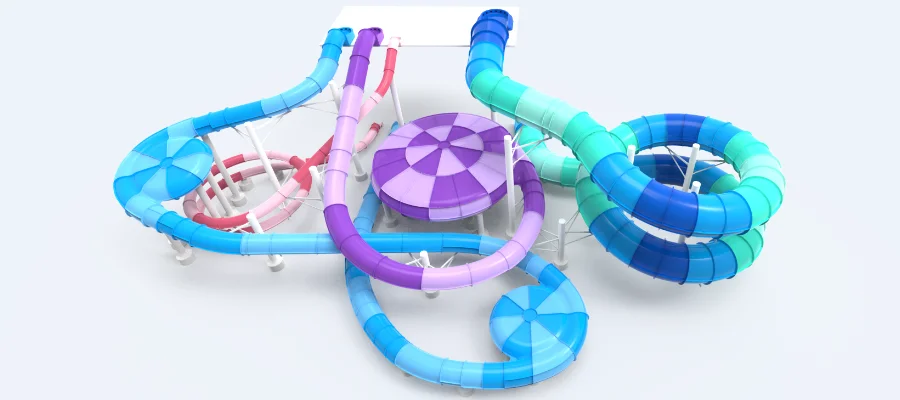
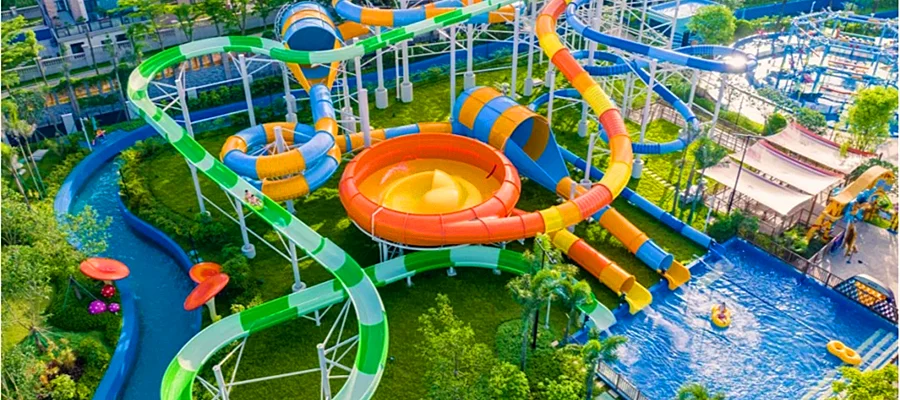
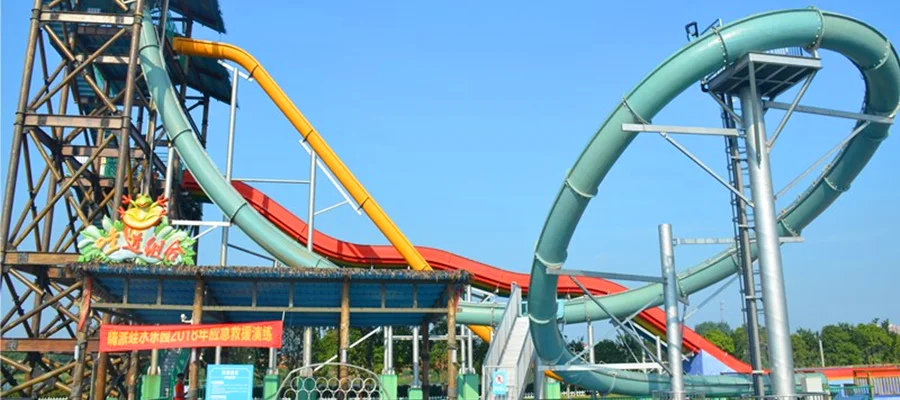
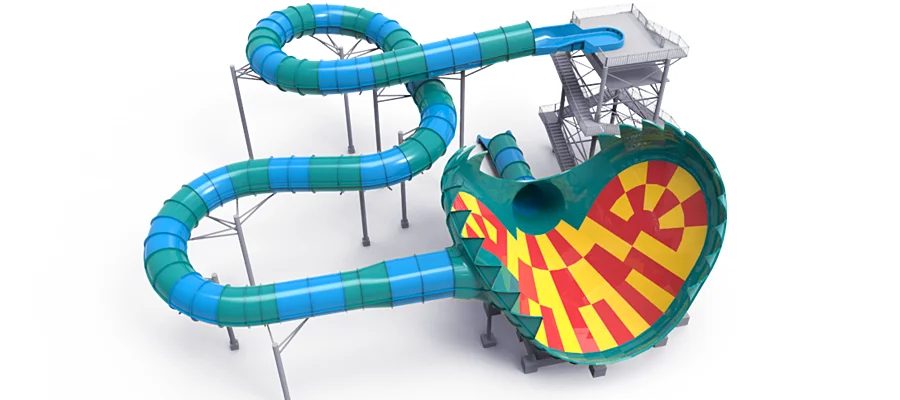
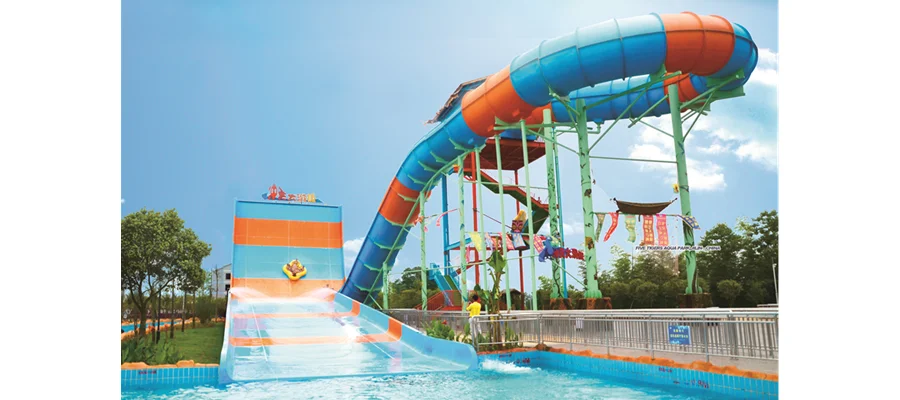
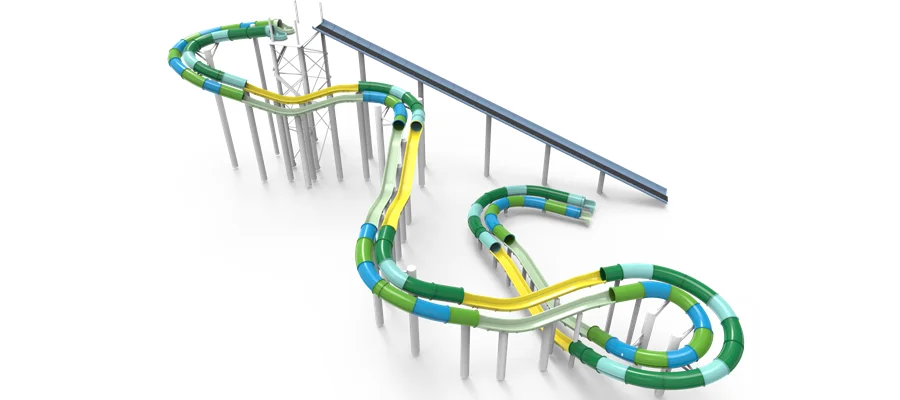
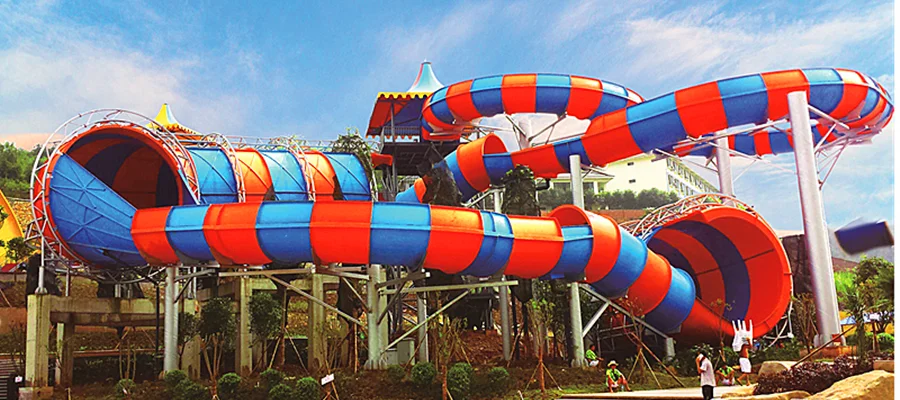
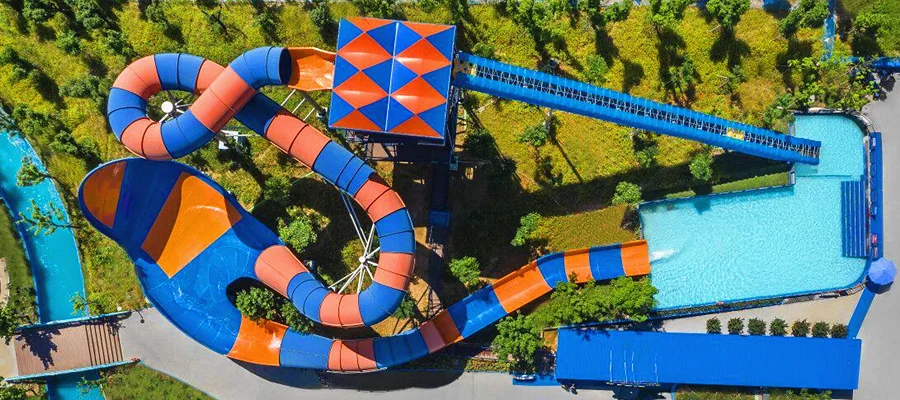
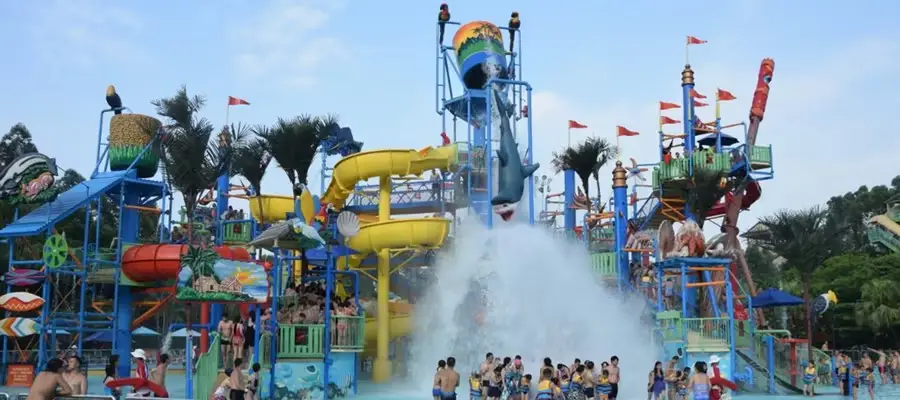
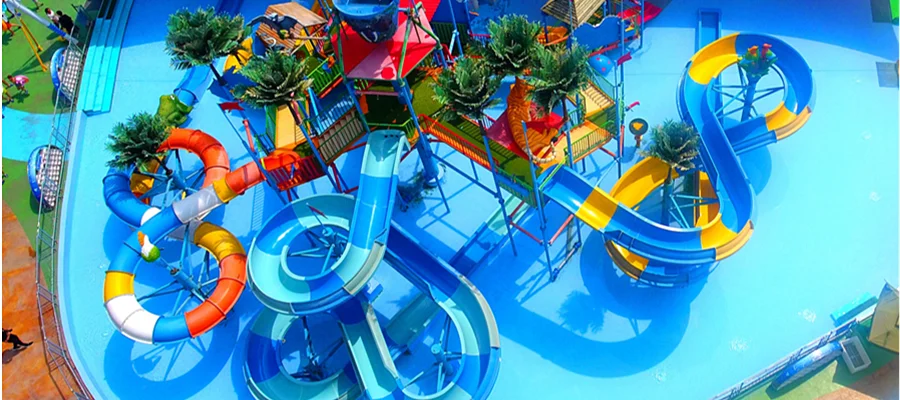
Thrill attractions form another distinct layer. Large slides can provide higher-intensity experiences for teenagers and adults, while strategically locating several slide types around shared towers or circulation routes can make the attraction zone more efficient.
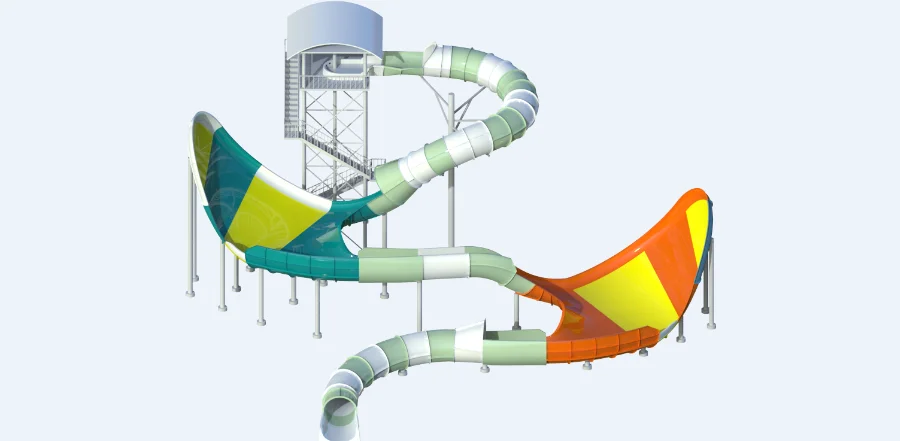
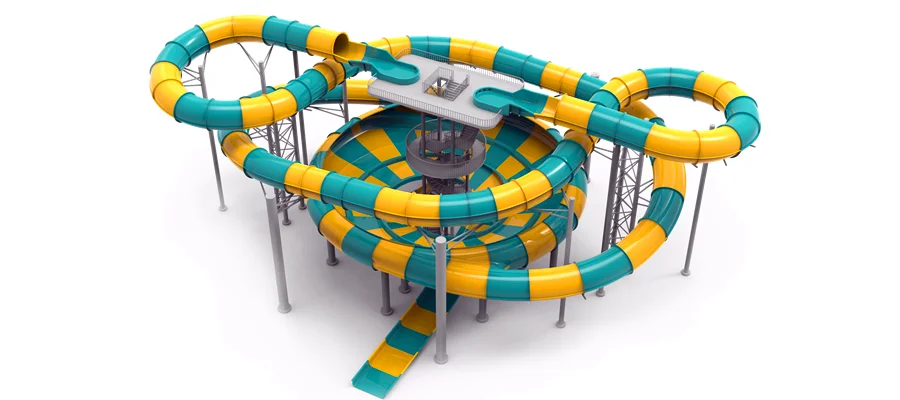
Our product range includes attractions such as Aqualoop Slides, Manta Slides, four-person Big Boomerang Slides, Double Water Roller Coasters, Python Raft Slides, and Flying Carpet Slides. Their dimensions, platform heights, speeds, and operating modes vary, giving project teams different options for building a coordinated thrill zone rather than repeating the same experience.
Shared infrastructure can also influence the overall water park project cost. For example, our Amazon Style Water Park is designed so its tower can be shared with other equipment. Such planning opportunities need to be assessed during the design stage, because structural, circulation, access, and operational relationships affect the complete project.
Give the Resort a Signature Attraction
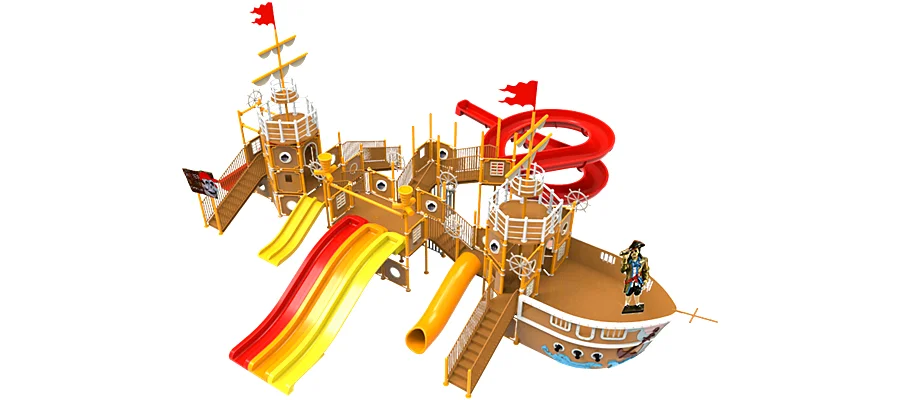
A signature attraction should provide a recognizable identity rather than simply adding another ride to the list. It might be a large themed water house, a major slide complex, a wave system, or another distinctive combination that becomes part of the resort’s visual identity.
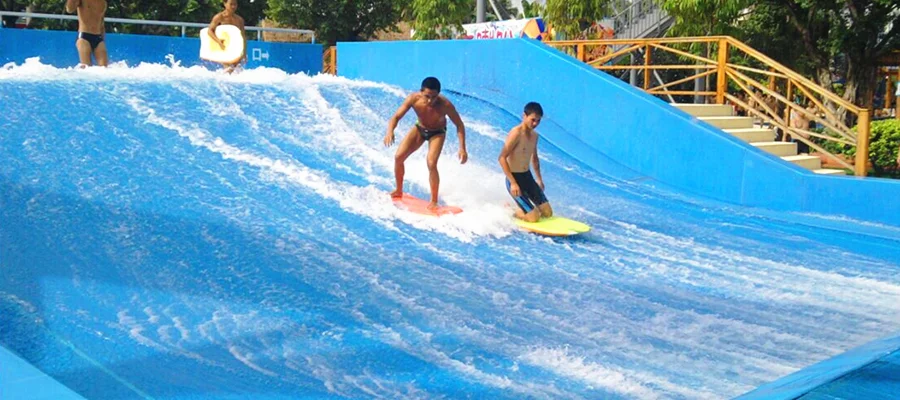
We focus on developing these features as part of broader component solutions. Our product portfolio covers Water Slides, Kids Series, Water Houses, Wave Systems, Surf Pools, and other equipment, allowing different attraction categories to be coordinated around a common project concept.
For large resorts, the signature layer can also connect physical design with marketing and guest movement. A landmark attraction can draw visitors toward a particular zone, while family, children’s, and leisure attractions distributed around it create reasons to explore beyond the headline experience.
Coordinate Design, Installation, and Operations
Attraction layering only works when the project is coordinated from design through installation. Layout decisions influence structural requirements, utility planning, guest circulation, maintenance access, safety separation, and staffing. IAAPA likewise highlights the importance of considering operational facilities and management requirements alongside attractions during development.
We provide professional water park planning and layout design, manufacturing, installation, and project support as connected services. Our approach allows us to coordinate combination configurations rather than treating each attraction as an isolated purchase. This is especially important for large resorts where numerous components must operate within one destination.
The same principle applies to budgeting. Instead of calculating water park project cost from a simple equipment list, project teams should consider the complete configuration, including design, infrastructure, installation, supporting facilities, and operational requirements. Early coordination can reveal relationships between components before construction makes changes more difficult.
Build the Park as One Connected Destination
A large resort water park works best when basic play, family attractions, thrill rides, and signature experiences each have a clear purpose. The goal is not to accumulate the largest possible list of attractions, but to create layers that serve different visitors while working together operationally.
We at Dalang help partners develop these combination solutions through professional design, coordinated installation, and operational support. By treating water park equipment as part of a connected system, we can build layouts that balance capacity, imaginative play, family participation, and signature experiences. For a major resort, that integrated approach gives the entire water park project cost a clearer relationship with the park’s physical design and long-term operation.