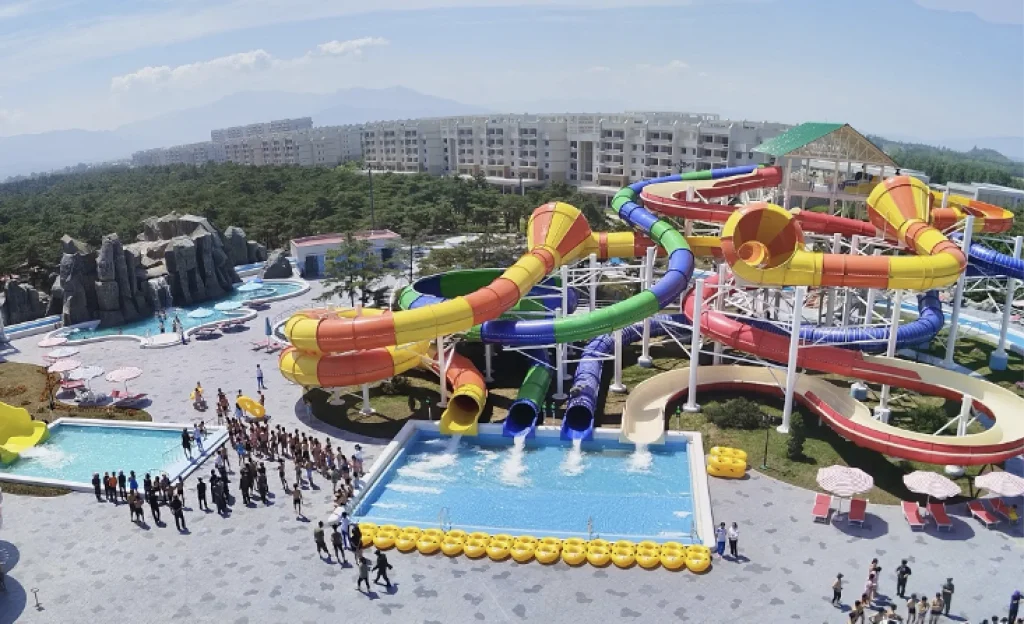
For resort developers and municipal park operators, the condition of the fiberglass gel coat directly impacts guest safety, ride throughput, and long-term asset ROI. When the surface degrades, friction increases, altering the ride dynamics and accelerating the wear on the core composite materials.
A meticulous buff and wax maintenance protocol is a required engineering standard to protect the fiberglass reinforced polymer (FRP) from environmental and chemical failure. But how exactly will the degradation make the effect? And how to do the maintenance, this guide will give you some hints.
Why is a Flawless Surface Finish Critical for Water Slide Rider Safety?
The physical condition of the slide’s surface dictates the interaction between the rider, the water flow, and the fiberglass. A compromised surface introduces severe operational hazards.
- Friction and Ride Dynamics: A highly polished mirror effect minimizes friction. When a slide surface becomes dull or chalky, the increased friction can cause riders to stall in low-angle sections or, conversely, create unpredictable vehicle (raft or mat) behavior in high-speed banking turns.
- Abrasion Prevention: Micro-abrasions and exposed fiberglass strands act like sandpaper against human skin. Maintaining a perfectly smooth surface eliminates the risk of severe friction burns or lacerations.
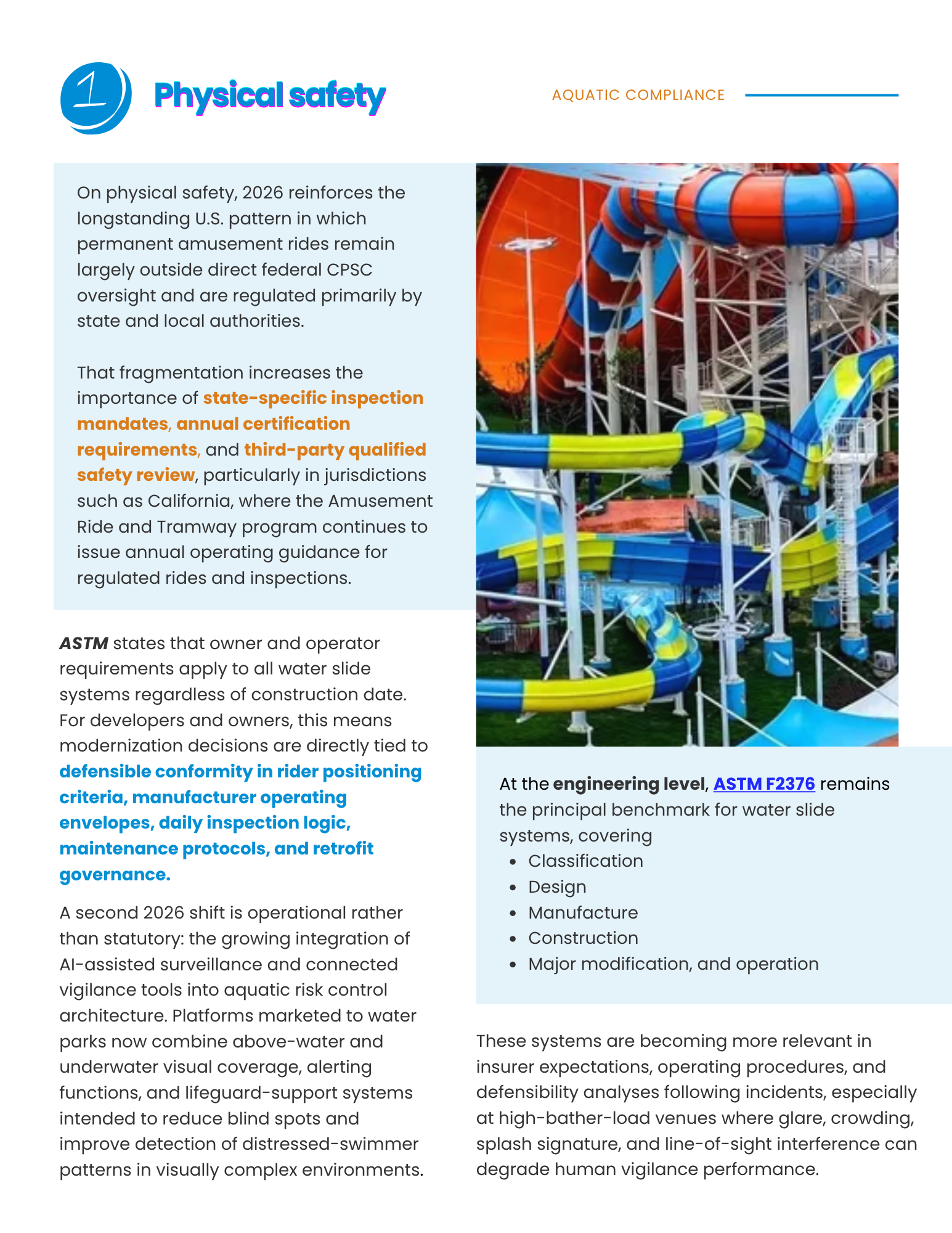
- Structural Sealing: The gel coat serves as the primary waterproof barrier for the structural fiberglass beneath. If this layer fails, water penetrates the FRP matrix, causing delamination, blistering, and eventual structural failure.
What Causes the Degradation of Commercial Water Slide Surface Finishes (Gel Coat Failure)?
Even premium L-RTM fiberglass structures face extreme environmental and chemical stress that breaks down the outer gel coat over time. The following factors are the major contributors:
- Chemical Degradation: Managing water ride chemistry is vastly different from standard pool maintenance. High levels of chlorine, combined with fluctuating pH and alkalinity, aggressively attack the gel coat, causing it to bleach and become porous.
- UV Radiation Exposure: Constant exposure to the sun’s ultraviolet rays causes photo-oxidation. This breaks down the molecular bonds in the gel coat, turning the once-glossy surface into a dull, chalky powder.
- Mechanical Friction: The continuous high-velocity impact of water, combined with rider vehicles and body friction, physically wears down the protective wax and polish layers, exposing the raw gel coat to the elements.
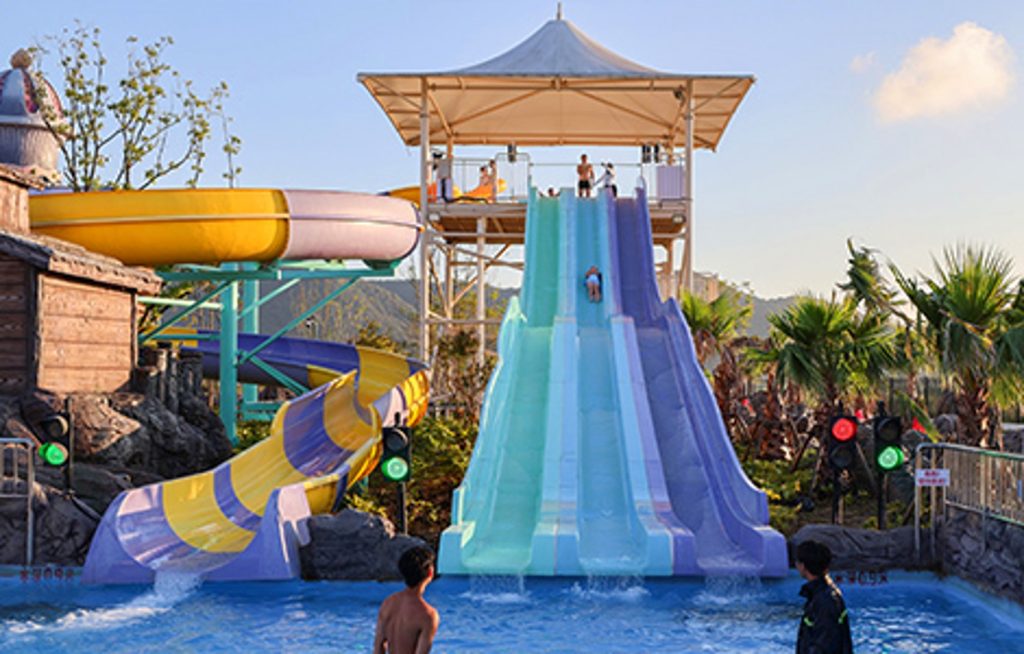
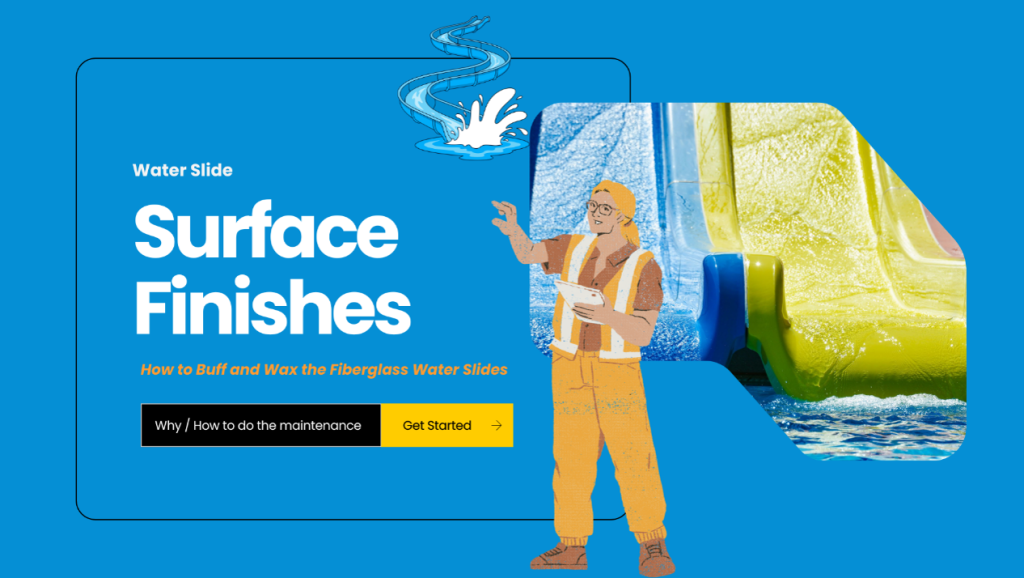
How to Buff and Wax Fiberglass Water Slides
Restoring a heavily oxidized commercial slide requires a strict, mechanical process. Utilizing automotive products or improper buffer techniques can permanently burn the fiberglass. Maintenance teams must rely on marine-grade compounds and specific rotary patterns. Here are the processes:
1. Chemical Decontamination and Prep
(mandatory before any abrasive action)
Wash the fiberglass thoroughly using specialized commercial cleaners to remove hard water scale, chlorine deposits, and surface oils. Buffing a dirty slide will grind contaminants directly into the porous gel coat, causing irreversible discoloration.
2. Surface Evaluation and Wet Sanding
(For deep scratches or severe oxidation)
Inspect the flume for deep gouges or heavy chalking. If compounding is insufficient, wet-sand the affected areas using 600-grit, followed by 800-grit and 1200-grit abrasive paper. This levels the surface and prepares it for the cutting compound.
3. Heavy Compounding (The Cut)
(Requires constant cross-hatch movement)
Utilize a high-torque rotary buffer equipped with a wool cutting pad and a marine-grade diminishing abrasive compound. Work in strict 2×2 foot sections using a cross-hatch motion (side-to-side, then up-and-down). Never hold the buffer stationary, as the intense friction will rapidly generate heat and burn through the gel coat.
4. Sealing and Waxing
(Applying the UV barrier)
Once the oxidation is removed and the color is restored, apply a specialized marine-grade polymer or carnauba wax using a dual-action polisher with a foam finishing pad. This final layer seals the microscopic pores, restores the high-gloss mirror effect, and provides a critical barrier against UV and chemical damage.
Protect Your Investment with Dalang’s Engineering Masterplan
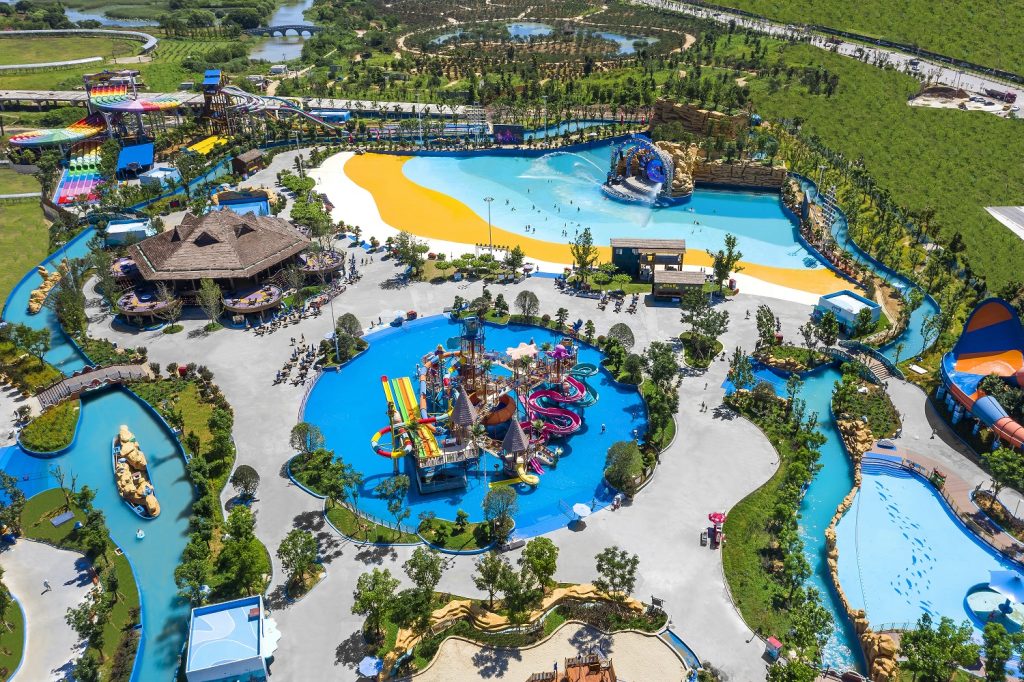
At Dalang, we engineer our water park water slides using advanced 5-axis CNC mold technology and superior L-RTM fiberglass construction, ensuring a stronger, highly resilient initial gel coat that withstands commercial operational stress.
Partner with Dalang for turnkey water park solutions, from structural master planning to lifetime operational guidance. Contact our technical team today to optimize your next resort installation.