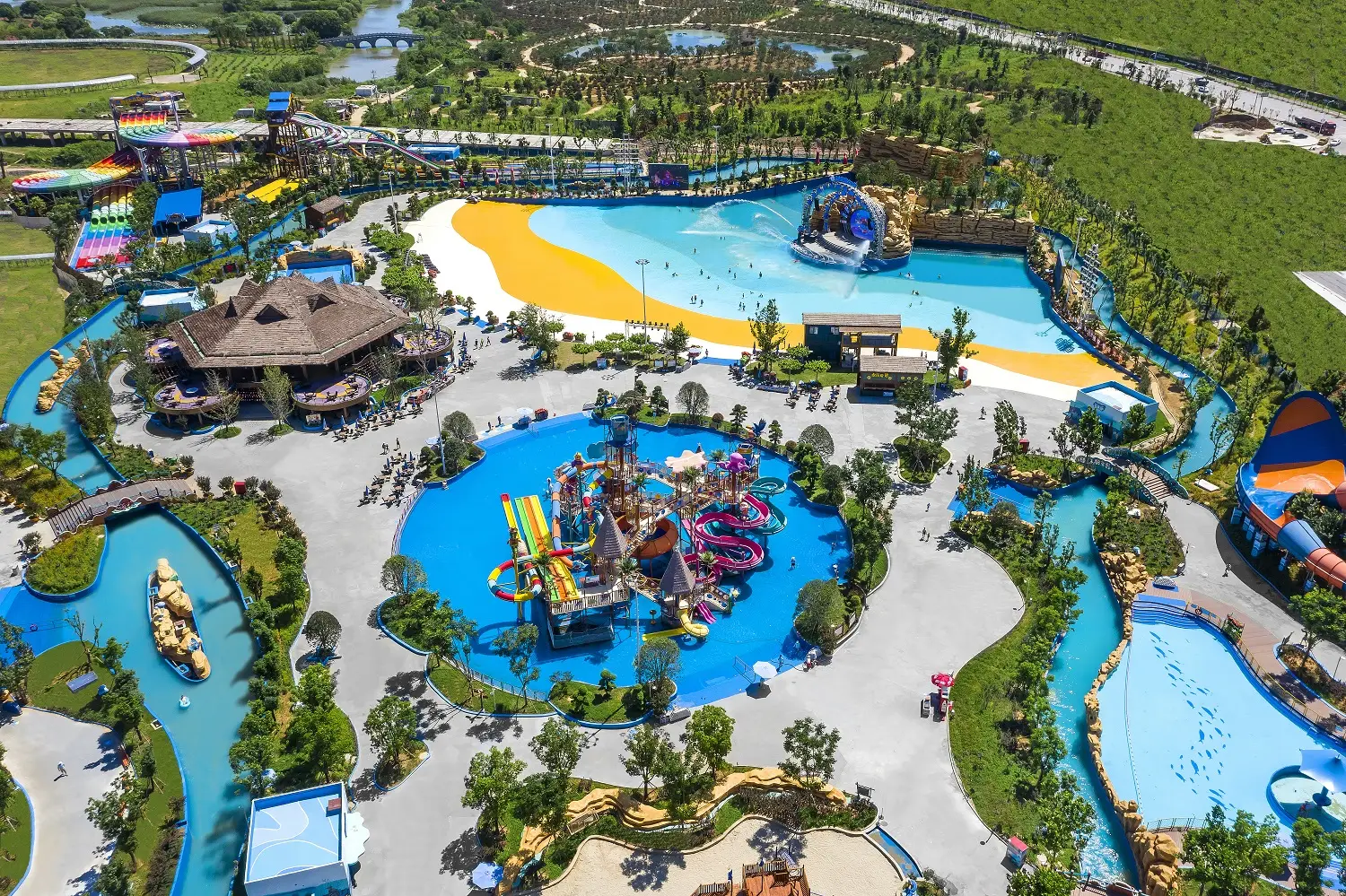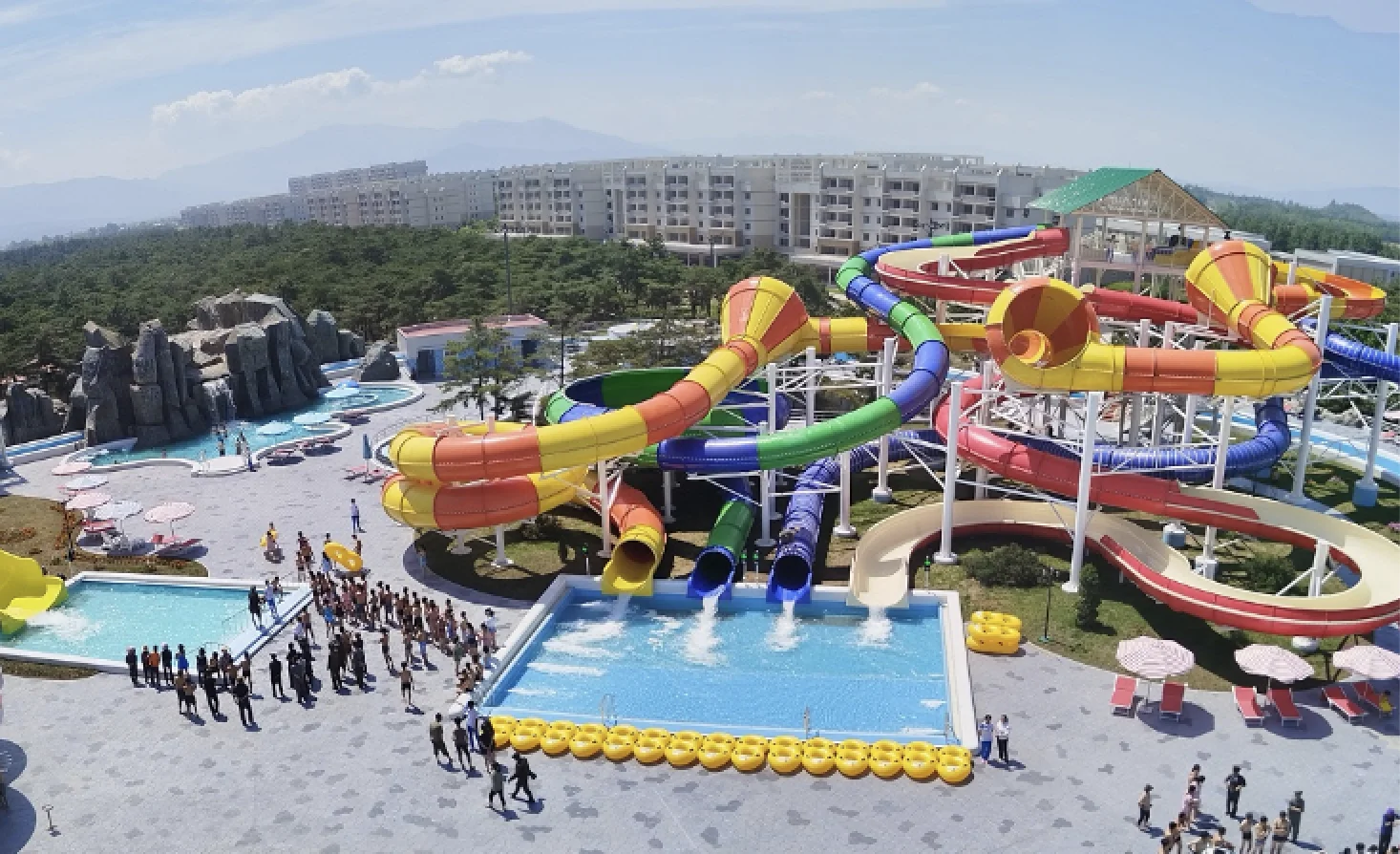
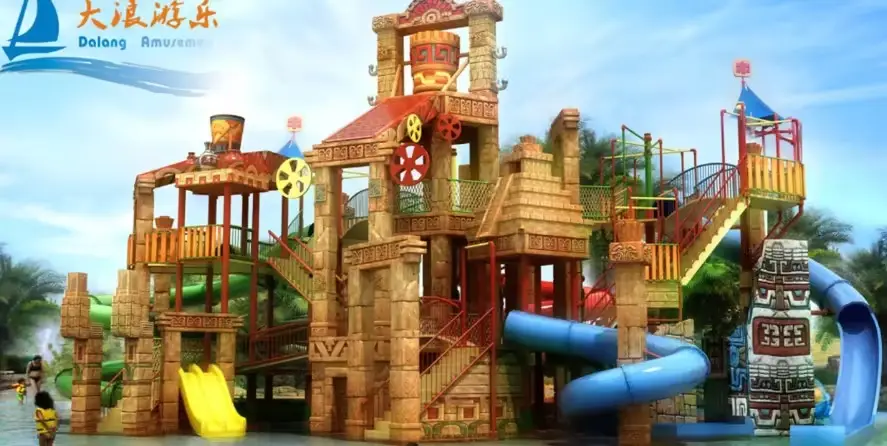
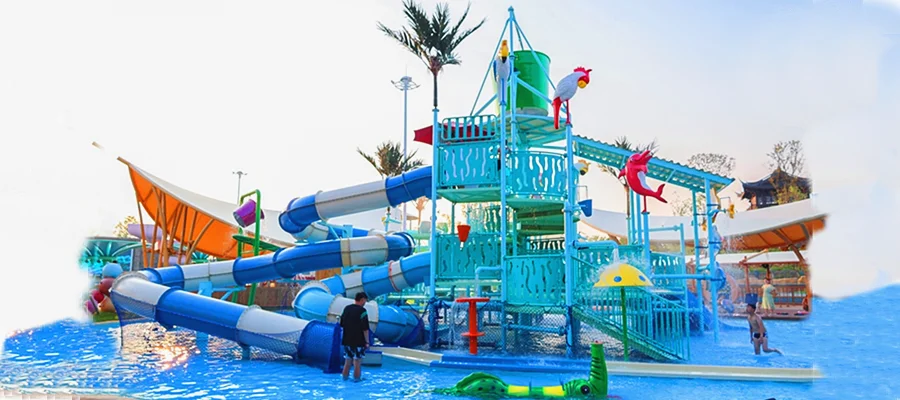
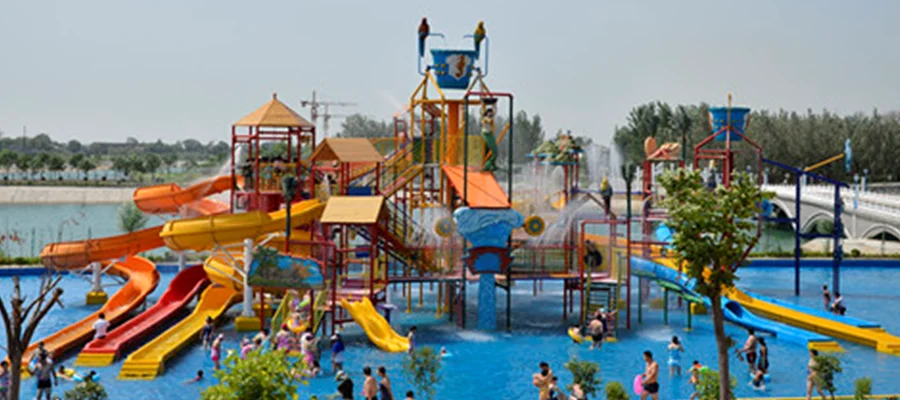
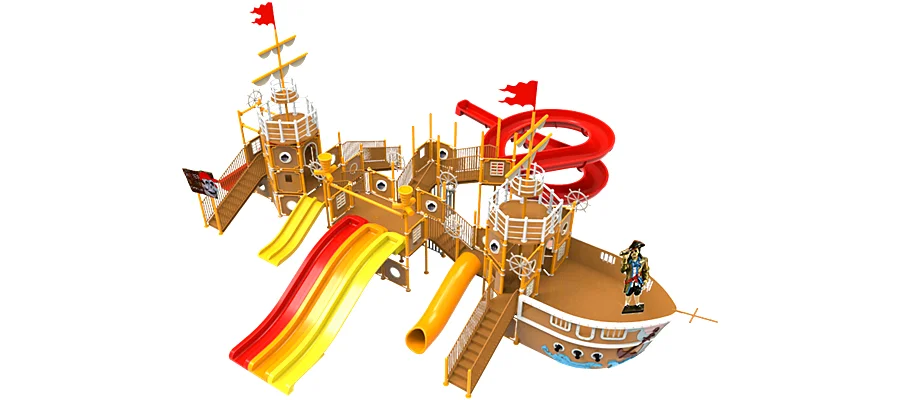
Commercial water slides and aquatic playhouses represent massive capital investments for developers, municipal parks, and resort operators. A robust warranty on commercial playground equipment, particularly for specialized aquatic assets, serves as a critical risk-reduction tool. It protects investments against manufacturing defects and structural wear while helping procurement teams forecast long-term upkeep budgets.
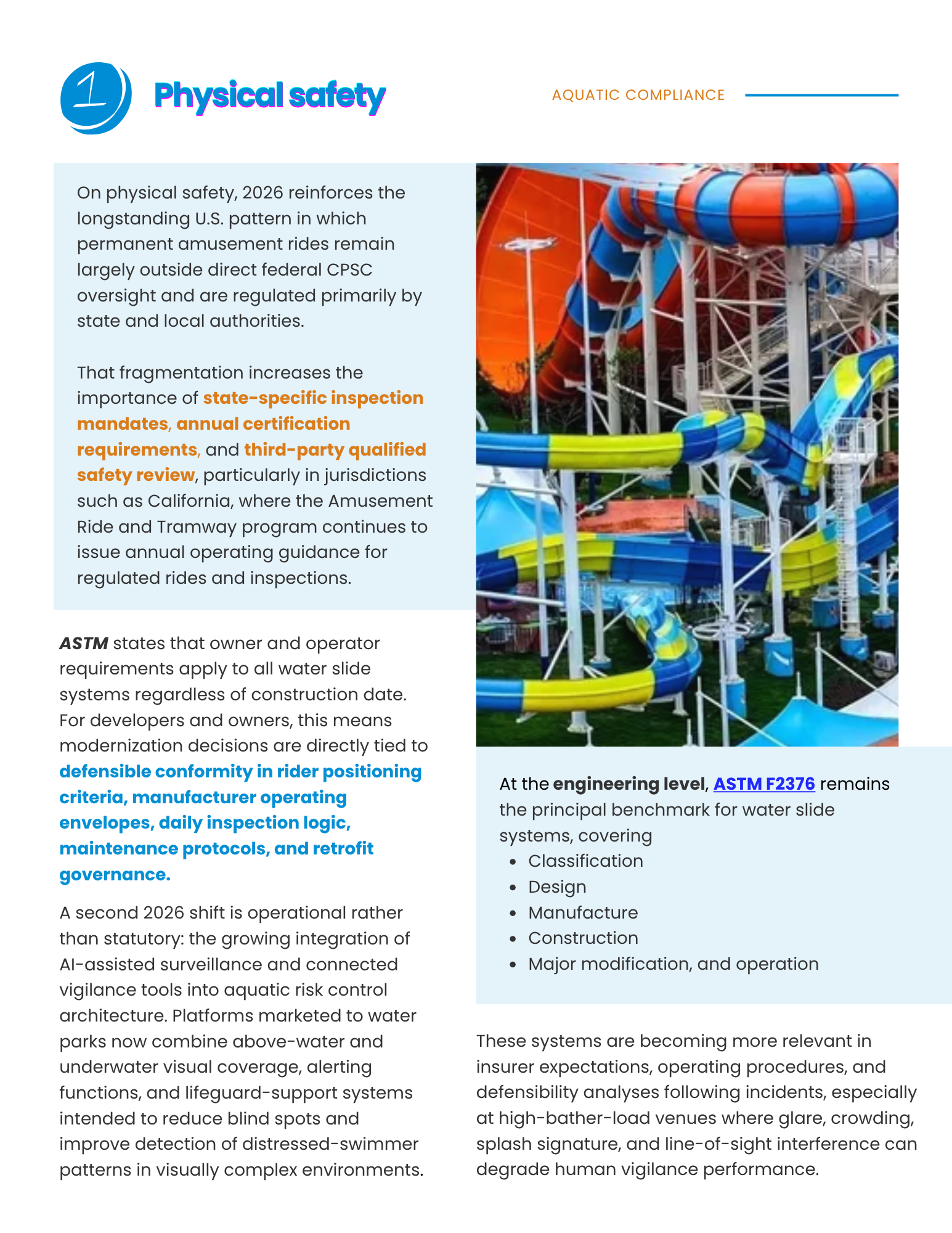
While dry land structures generally align with safety guidelines such as ASTM F1487, aquatic equipment operates in harsh chemical environments under continuous hydraulic loads.
To avoid unexpected capital expenditures, park owners must understand the distinct differences between structural, surface, and mechanical coverage, and know exactly which maintenance practices keep these warranties intact.
Warranty Duration by Aquatic Component
Warranty periods vary significantly based on the engineering function and environmental exposure of the component. The primary division separates the structural backbone, the rider surface, and the active mechanical parts.
Structural Elements
Structural elements form the load-bearing foundation of any commercial water slide or splash pad.
- Components: Hot-dip galvanized steel columns, structural support flanges, engineered footings, and high-tensile steel framing.
- Typical Duration: 10 to 25 years.
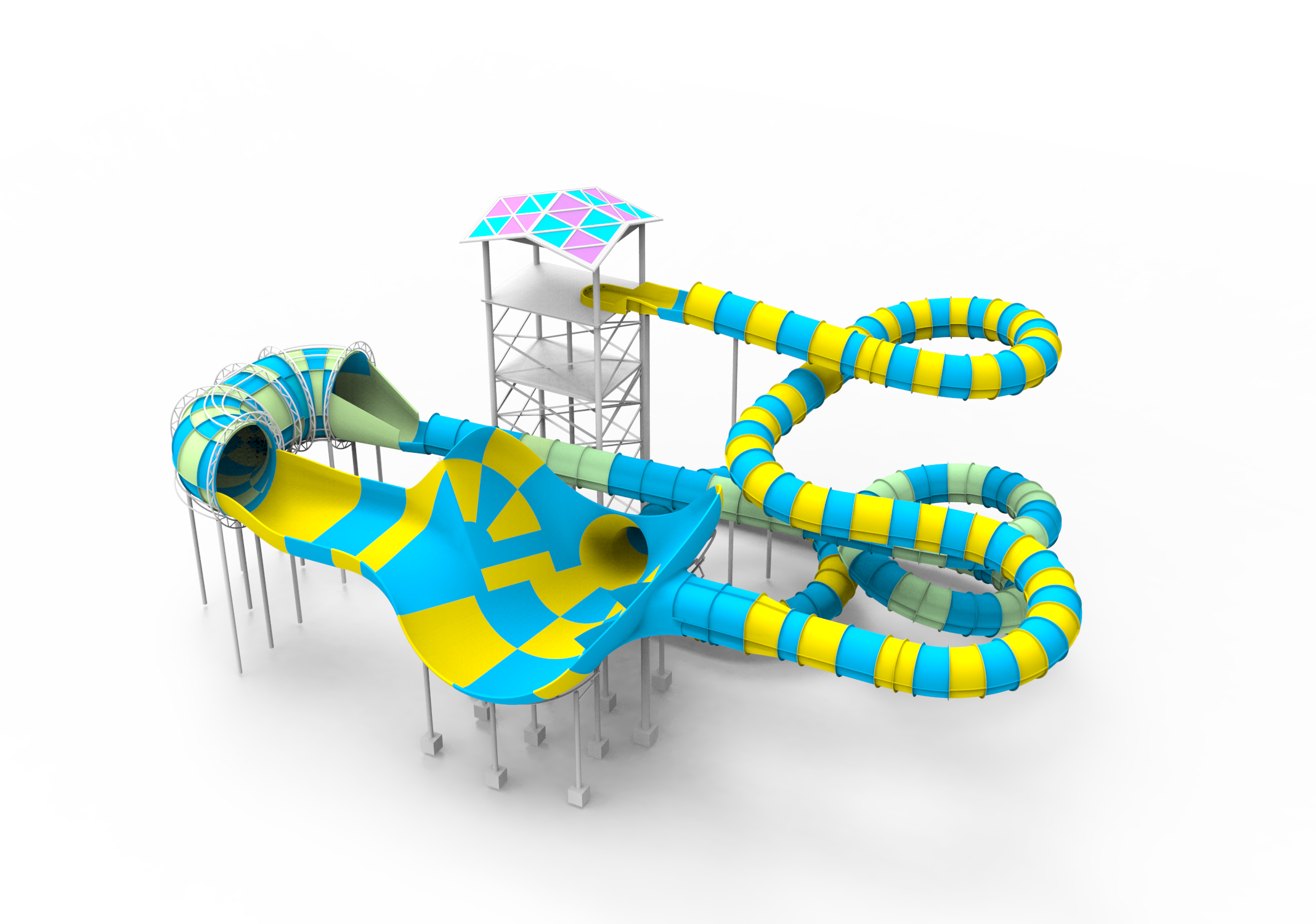
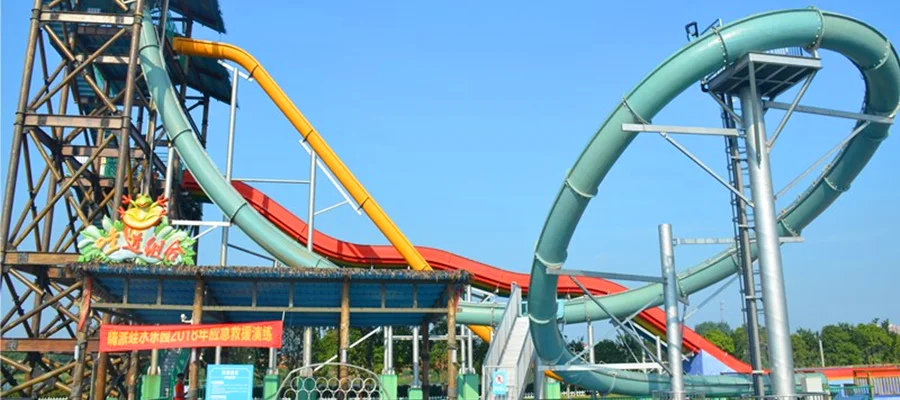
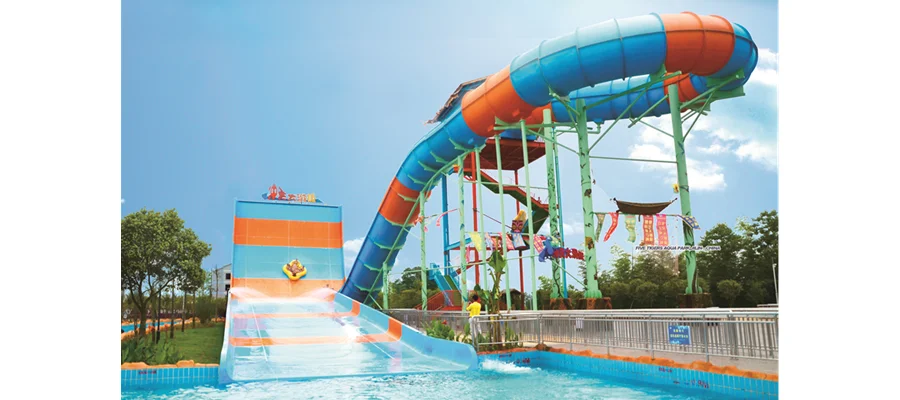
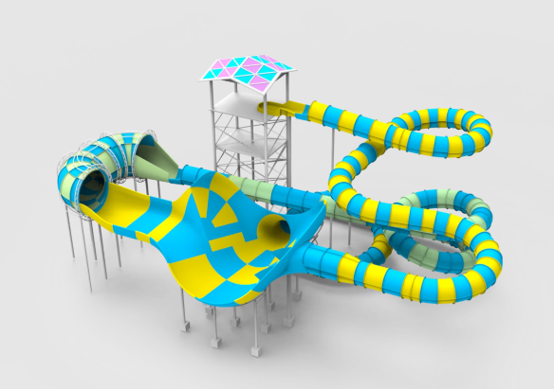
- Coverage Details: This protects against premature structural failure, weld fracturing, and abnormal corrosion occurring under standard environmental use. High-velocity attractions, such as a drop-launch aqualoop, rely heavily on these structural warranties due to the intense dynamic loads they generate.
Surface and Flume Elements (The Rider Experience)
The surface elements dictate the rider experience and face the highest levels of daily friction, UV exposure, and chemical contact.
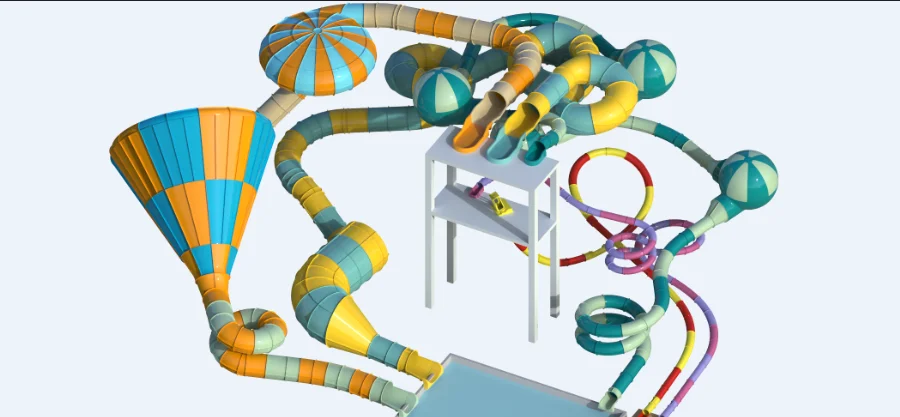
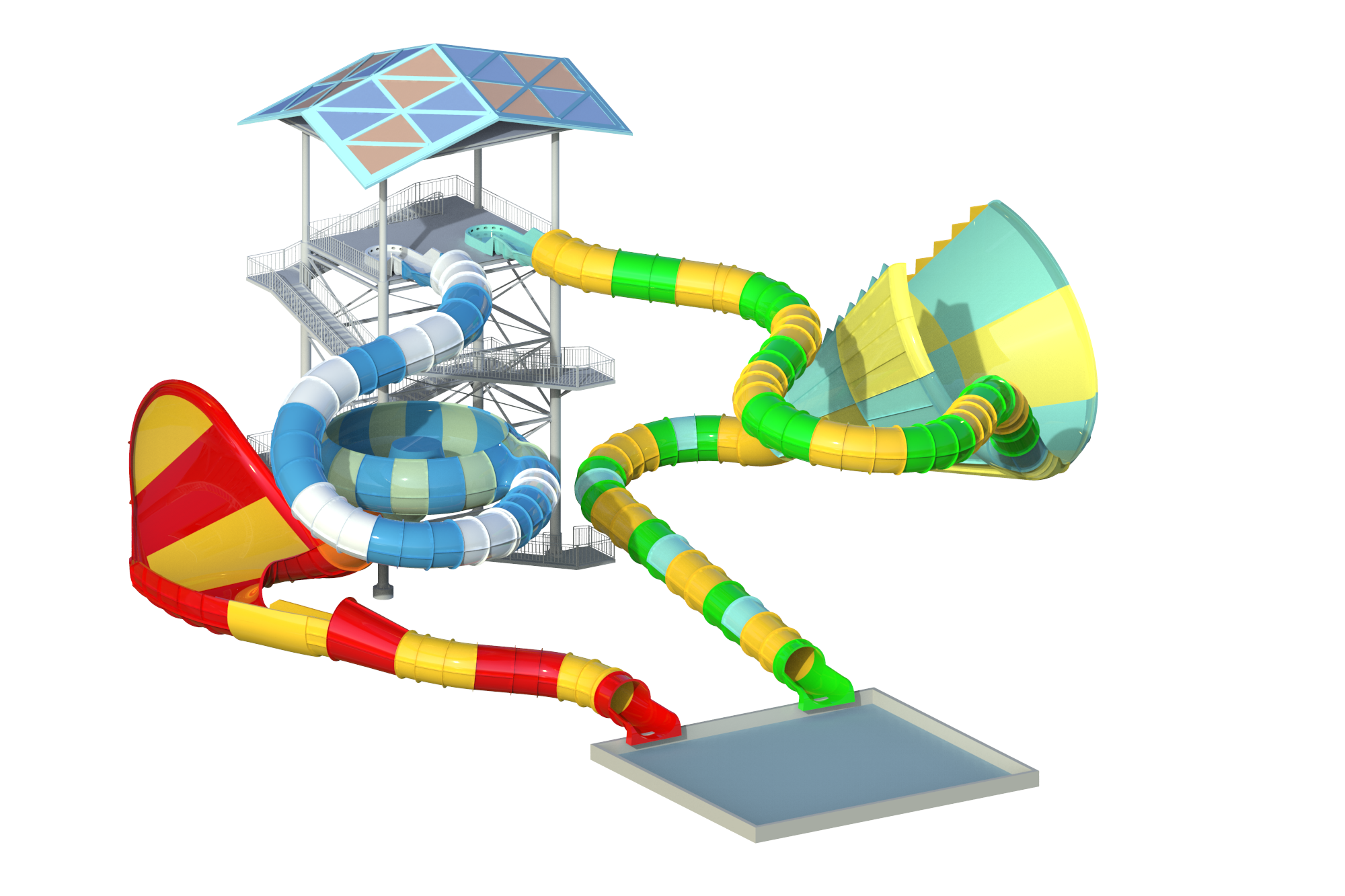
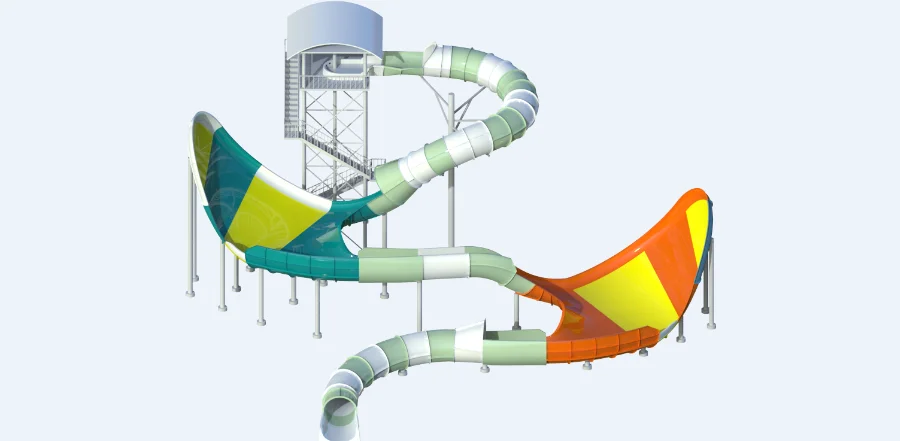
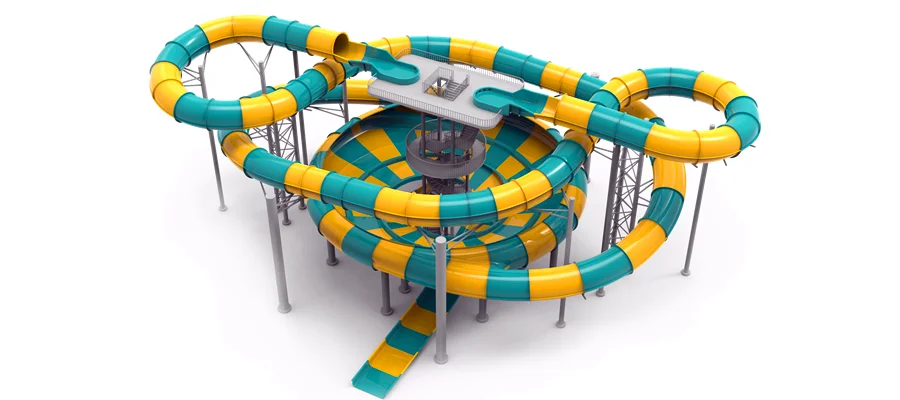
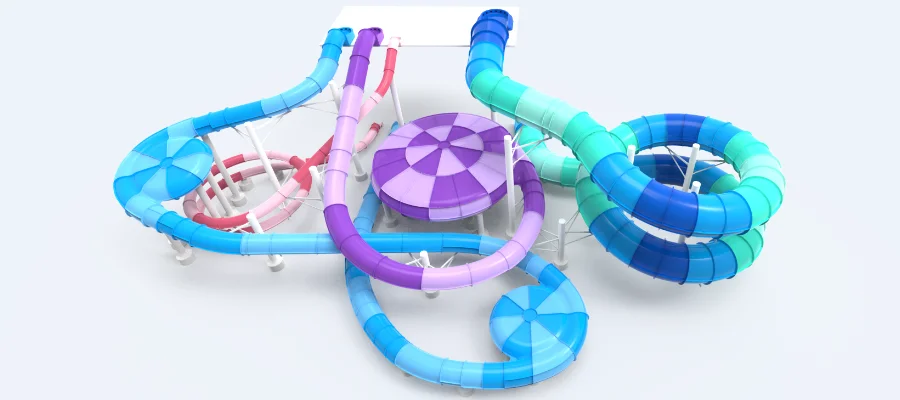
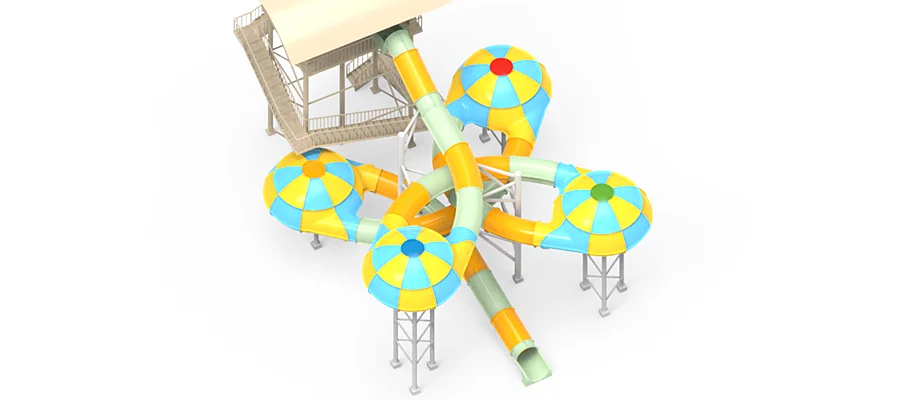
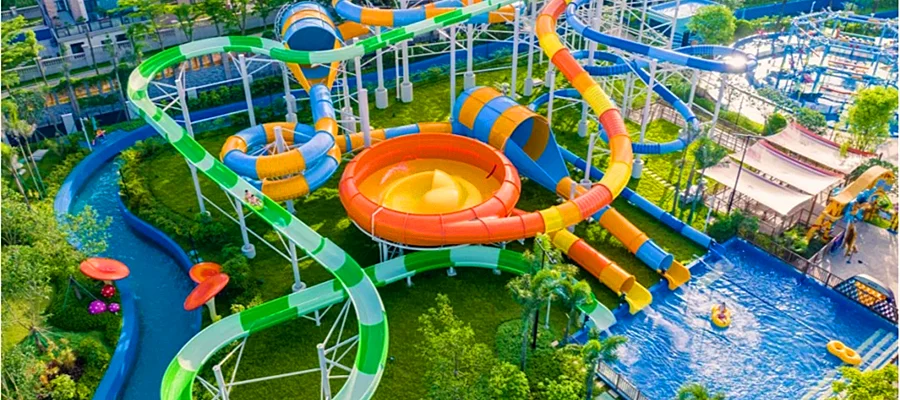
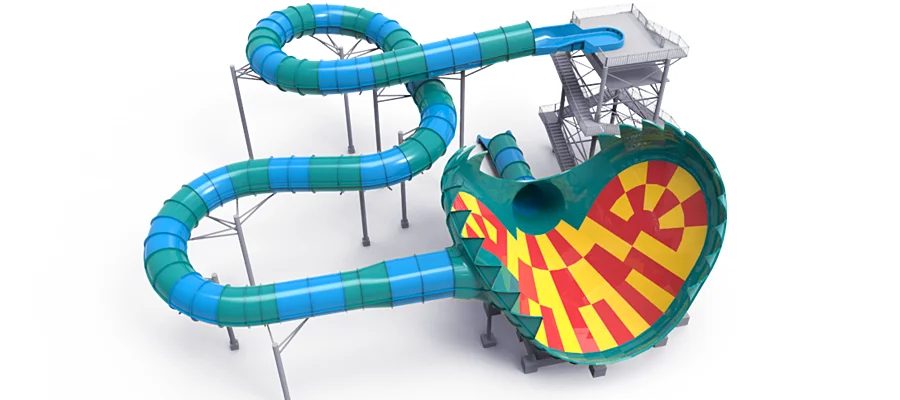
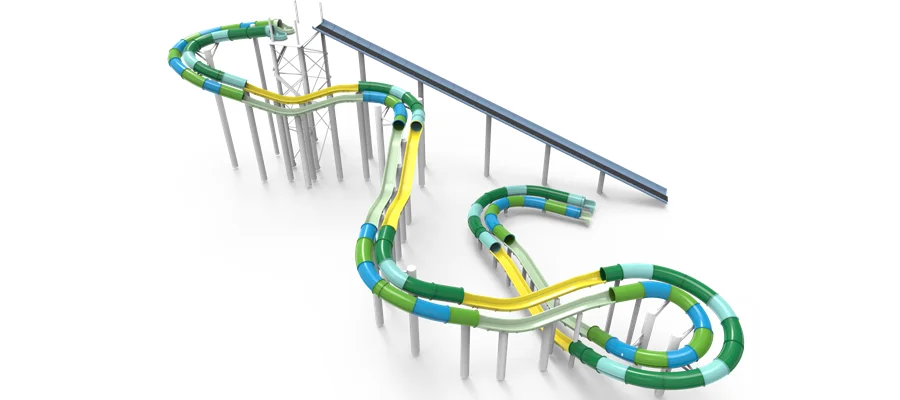
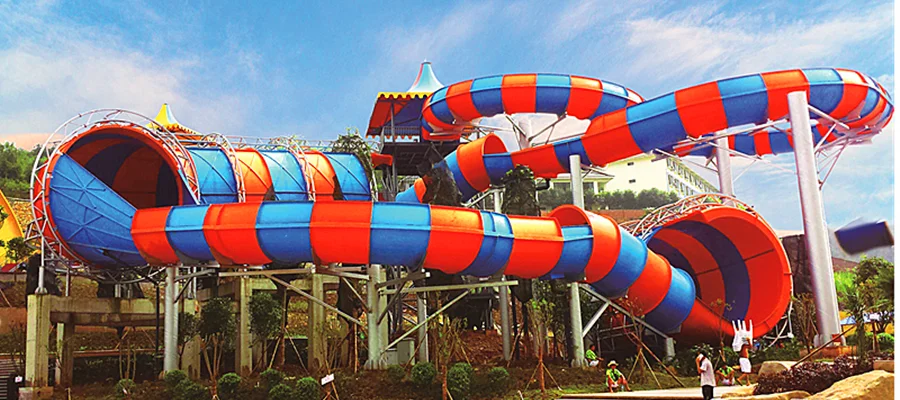
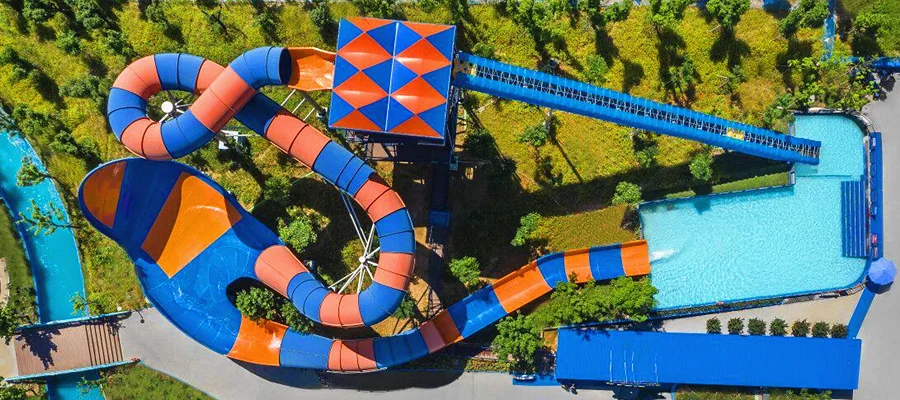
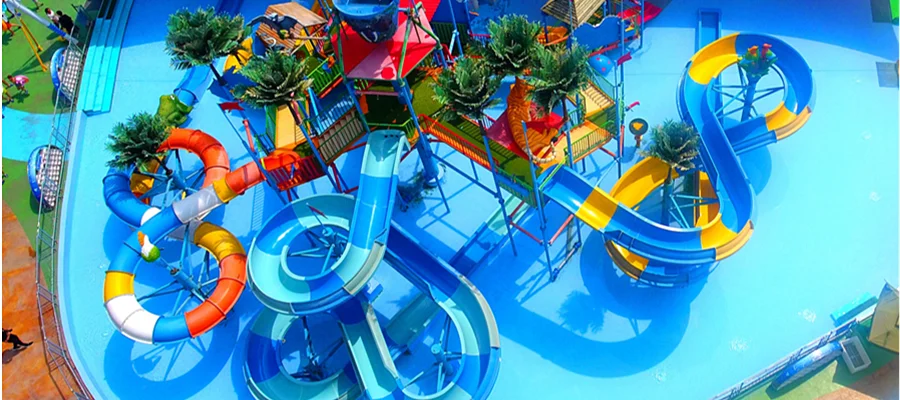
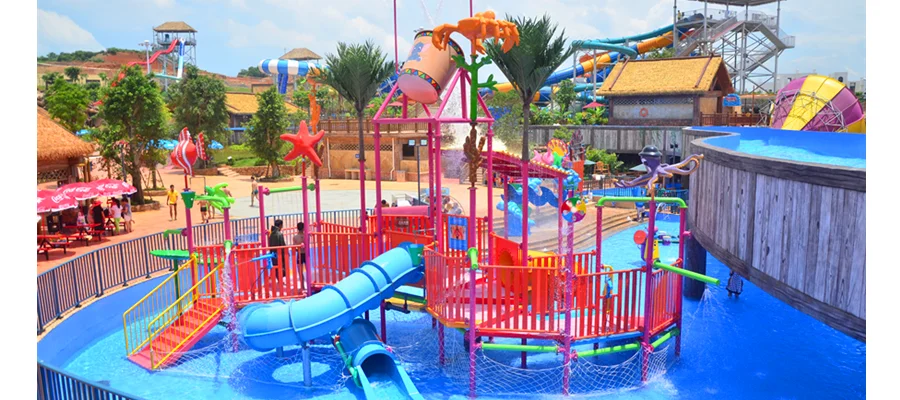
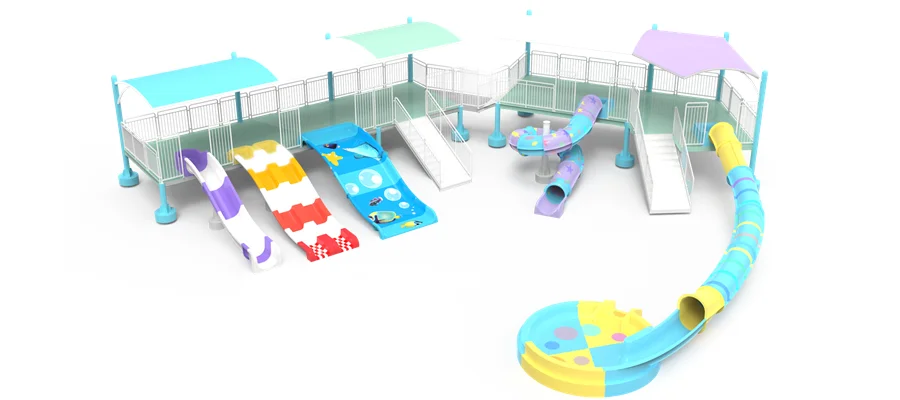
- Components: L-RTM fiberglass water slide flumes, gelcoat finishes, and high-density polyethylene (HDPE) interactive play enclosures. This includes complex geometries found in a toilet bowl water slide or a multi-lane mat racer.
- Typical Duration: 5 to 15 years.
- Coverage Details: Warranties cover severe gelcoat delamination, fiberglass blistering (osmosis), and excessive UV chalking or fading that exceeds normal weathering expectations.
Mechanical & Moving Parts (The Active Elements)
Active elements regulate water flow, interactive play, and ride automation.
- Components: Hydraulic pumps, wave generators, automated diverter valves, start-tubes, and dumping bucket bearings.
- Typical Duration: 1 to 5 years.
- Coverage Details: Coverage applies strictly to manufacturing defects in moving elements subjected to continuous daily friction and high-pressure water flow.
What is Covered vs. The “Water Chemistry” Exclusions
Standard commercial warranties protect against failure occurring under normal, intended play conditions. However, manufacturers enforce strict exclusions based on operator liability.
What is Covered (Manufacturer Liability)
- Material or manufacturing defects: This includes fiberglass seam tears, improper curing of resins, or stitching faults in non-rigid elements.
- Failure of structural support flanges: Coverage applies if supports fail under normal, intended aquatic play conditions without external traumatic force.
The Critical Exclusions (Operator Liability)
- The Water Chemistry Clause: This is the single most common reason water slide warranties are voided. Manufacturers exclude damage to gelcoats and steel infrastructure caused by improper pool pH, unmanaged free chlorine levels, or high Total Dissolved Solids (TDS).
- Vandalism or intentional misuse: Damage resulting from unauthorized access or malicious destruction is universally excluded.
- Improper installation: Any installation that deviates from the approved structural engineering blueprints or utilizes uncertified contractors will void coverage.
- Winterization neglect: Failing to properly drain underground pipes and manifolds leading to freeze-cracks is considered operator negligence and is excluded from coverage.
How to Preserve Your Water Park Warranty
Facility owners must follow specific compliance steps to ensure warranty claims are recognized and honored by equipment suppliers.
- Certified Installation: Operators must utilize manufacturer-authorized installation crews or Certified Playground Safety Inspectors (CPSI). Proper torque on slide flange bolts is critical to prevent leaks and stress fractures.
- Documented Upkeep & Water Logs: Facilities must keep rigorous, daily logs of water chemistry (pH, ORP, chlorine levels) alongside routine physical safety inspection records.
- Approved Replacement Parts: Operators must perform all hydraulic or structural repairs using exclusively manufacturer-approved replacement parts to avoid voiding the entire system warranty.
- Understand Proration: Procurement teams must review whether the fiberglass flume coverage is prorated. Prorated coverage means the manufacturer’s reimbursement value decreases incrementally as the slide ages.
FAQ
Does normal cosmetic fading void a fiberglass warranty?
No. Standard warranties expect UV fading over a decade of outdoor use. Warranties only cover excessive or premature structural degradation of the gelcoat finish that impacts the integrity or safety of the slide.
Why do I need to prove my water chemistry for a structural steel warranty claim?
High levels of chloramines in the air, especially in indoor water parks, rapidly corrode exposed steel. Manufacturers require proof that the park maintained proper air handling and water quality to honor rust-related structural claims.
Do warranties cover the sealant between fiberglass slide sections?
No. Caulking and sealant are considered consumable maintenance items. The park operator must replace sealant every few seasons to prevent leaks; it is not covered by long-term structural warranties.
Conclusion
A reliable commercial warranty relies on premium manufacturing combined with diligent, documented park maintenance.
Dalang engineers aquatic attractions that meet rigorous global civil and health codes, minimizing the risk of structural failure and gelcoat degradation. Contact the Dalang Group master planning team today to request a comprehensive consultation on your project.
References
- ASTM International. ASTM F1487 – 21 Standard Consumer Safety Performance Specification for Playground Equipment for Public Use. https://www.astm.org/f1487-21.html
- ASTM International. ASTM F2376 – 21 Standard Practice for Classification, Design, Manufacture, Construction, and Operation of Water Slide Systems. https://www.astm.org/f2376-21.html
- Centers for Disease Control and Prevention (CDC). The Model Aquatic Health Code (MAHC). https://www.cdc.gov/mahc/index.html
- Standardization Administration of the P.R.C. GB8408-2018 Safety Code for Large Amusement Facilities. https://www.chinesestandard.net/PDF/English.aspx/GB8408-2018