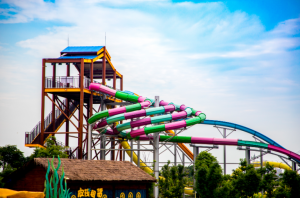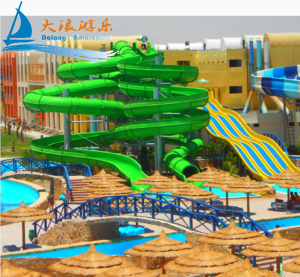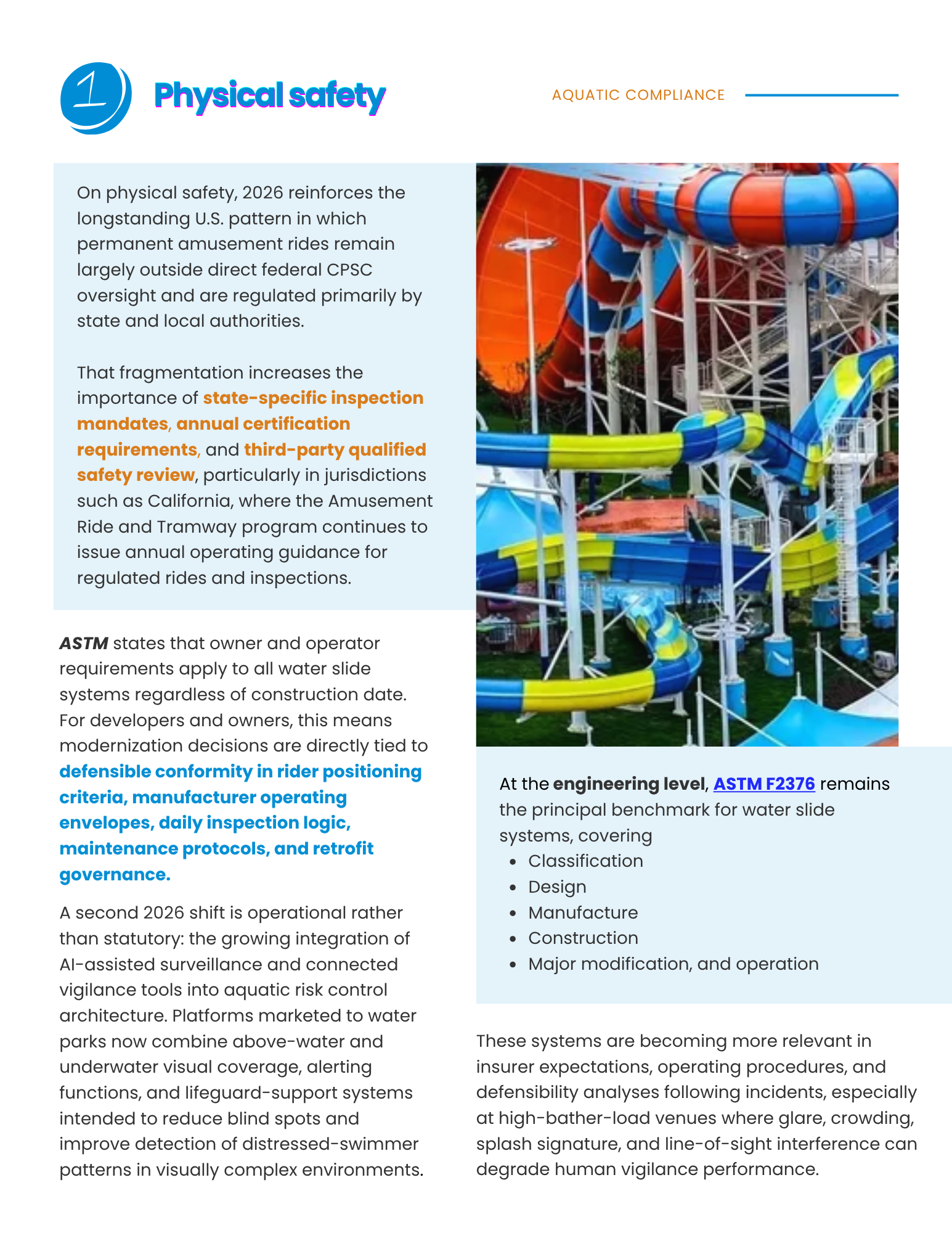
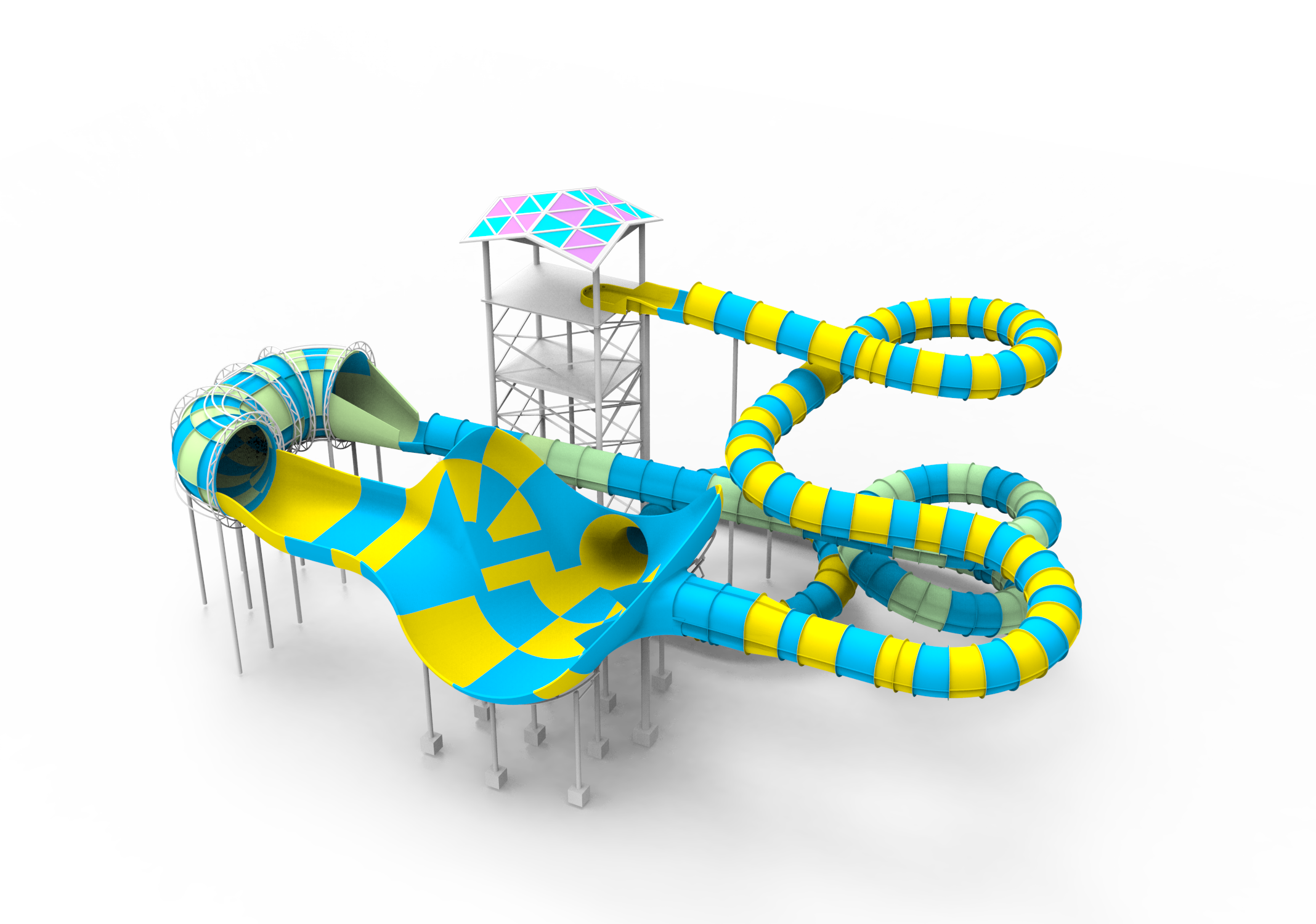
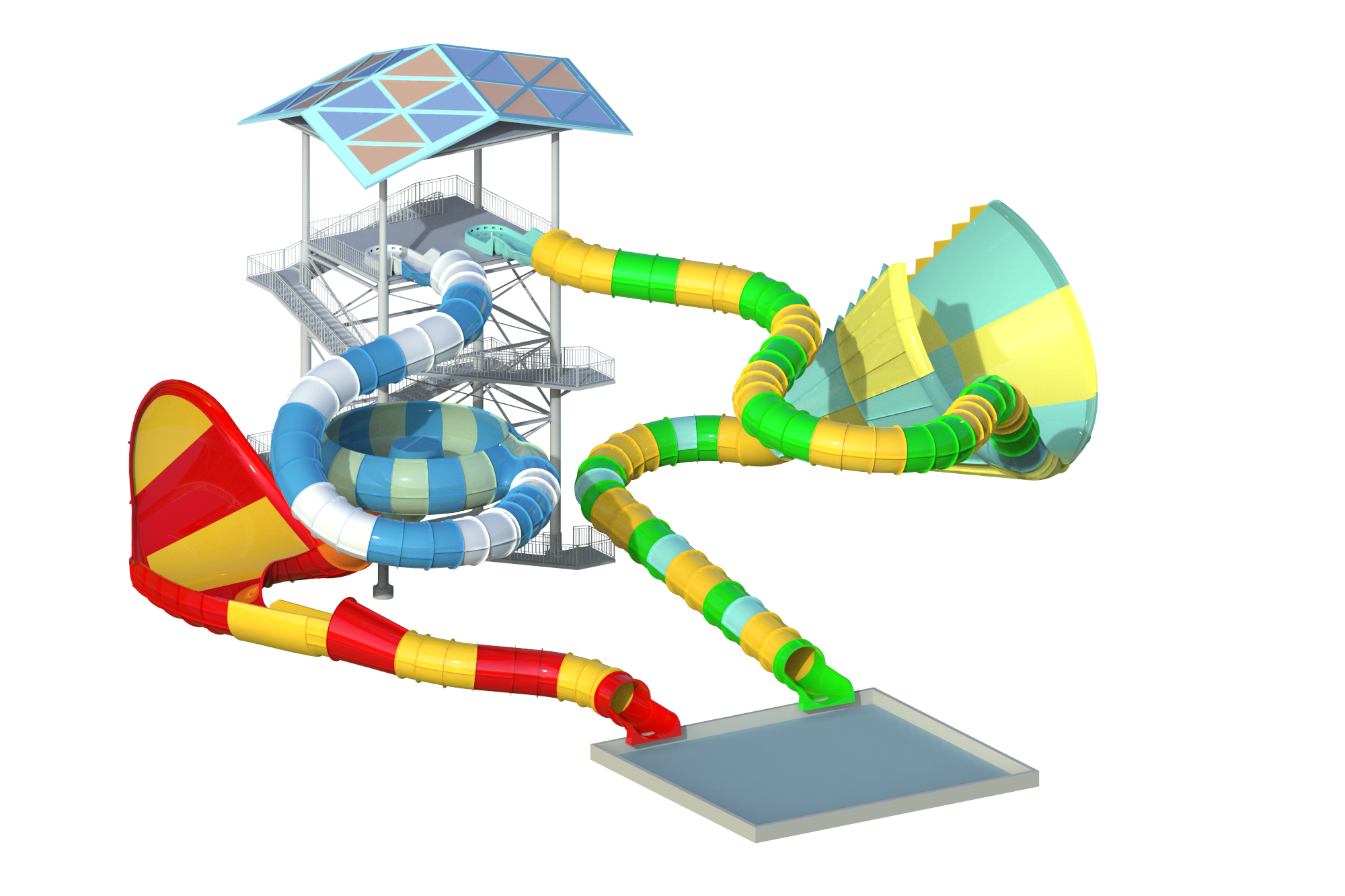
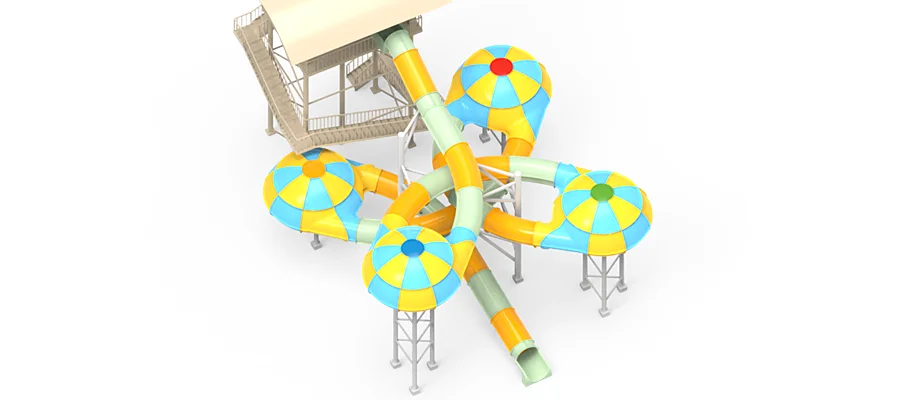
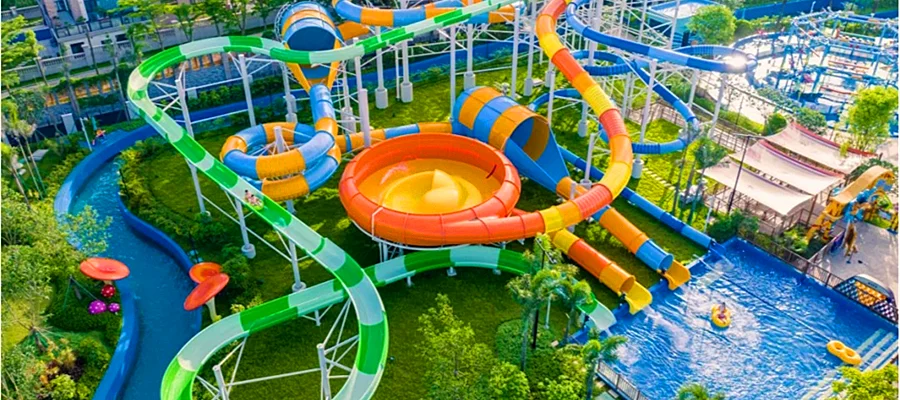
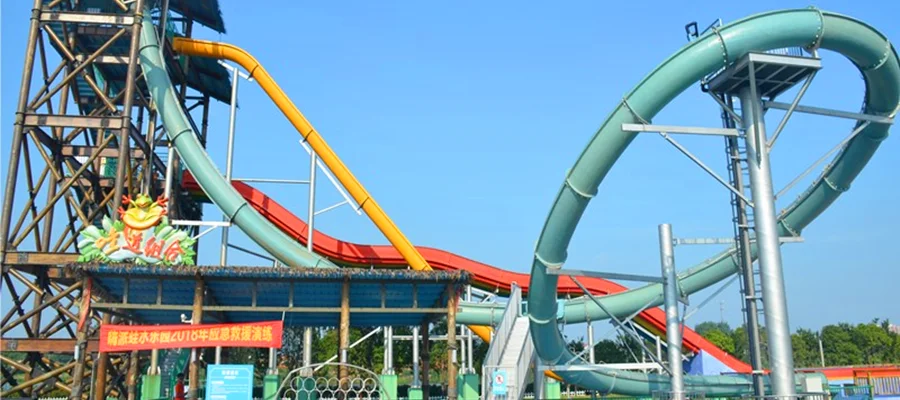
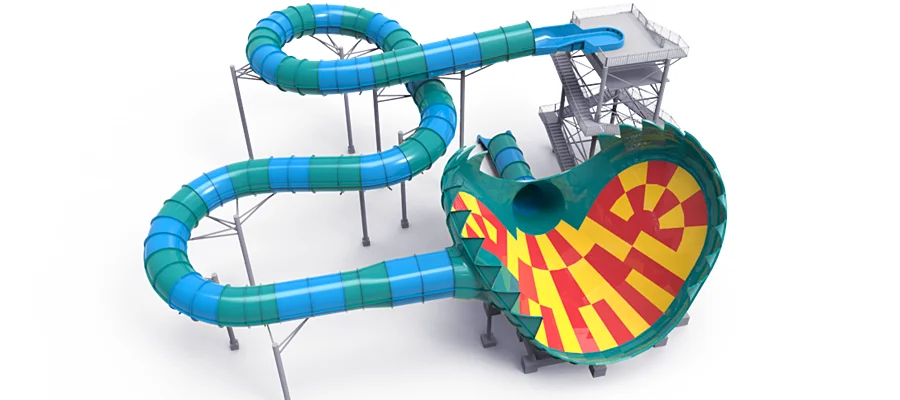
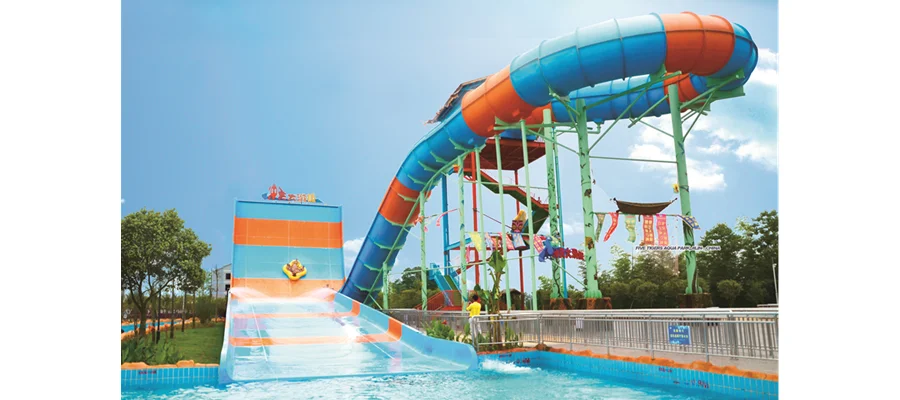
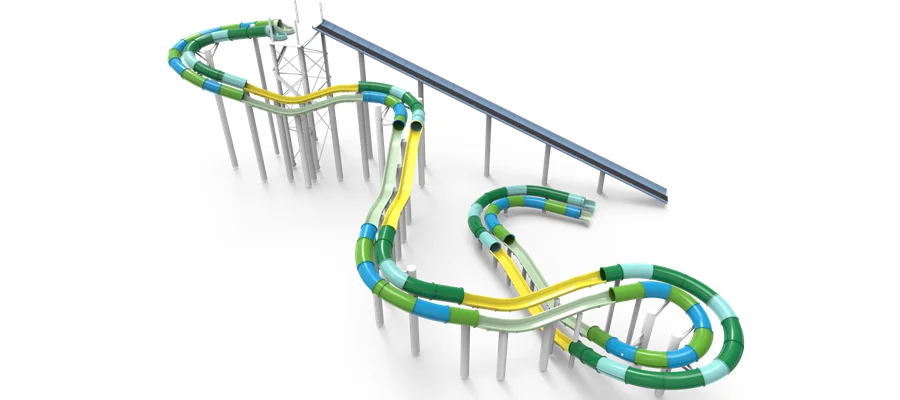
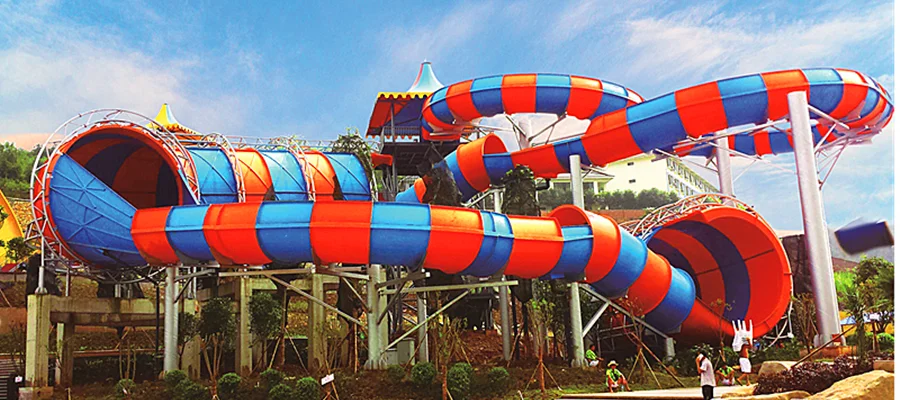
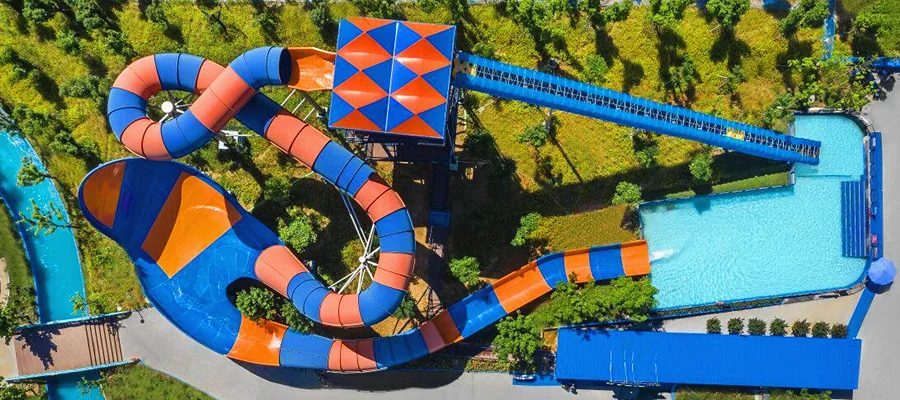
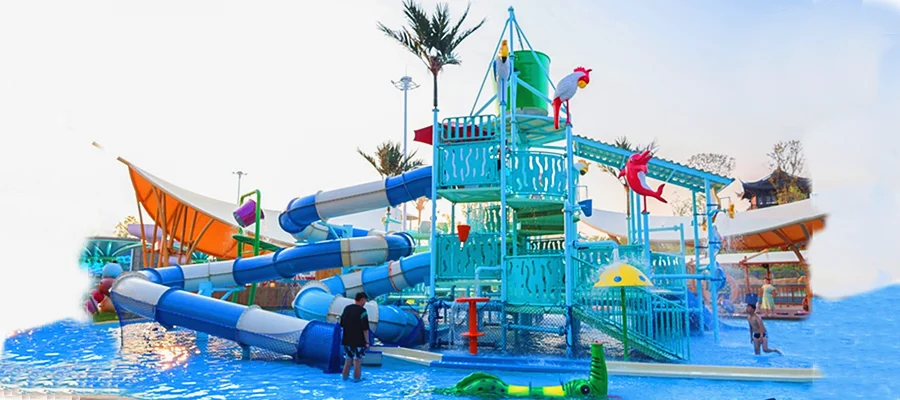
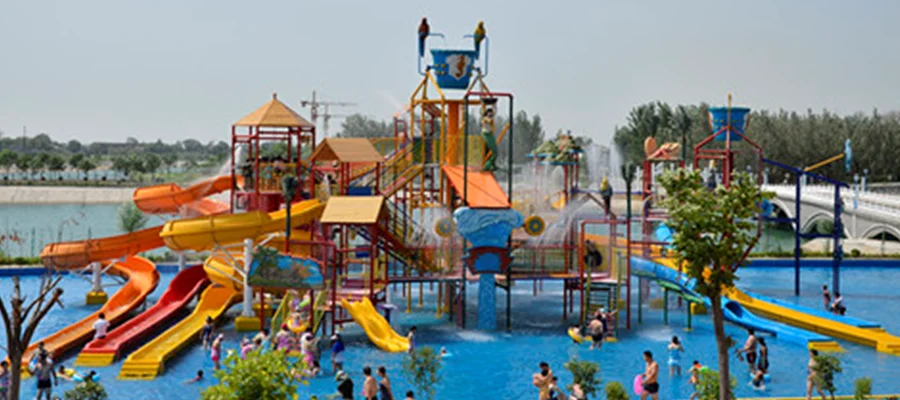
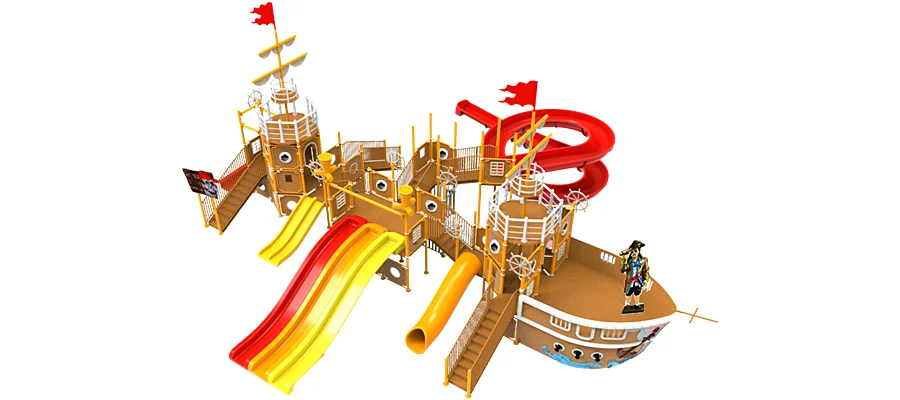
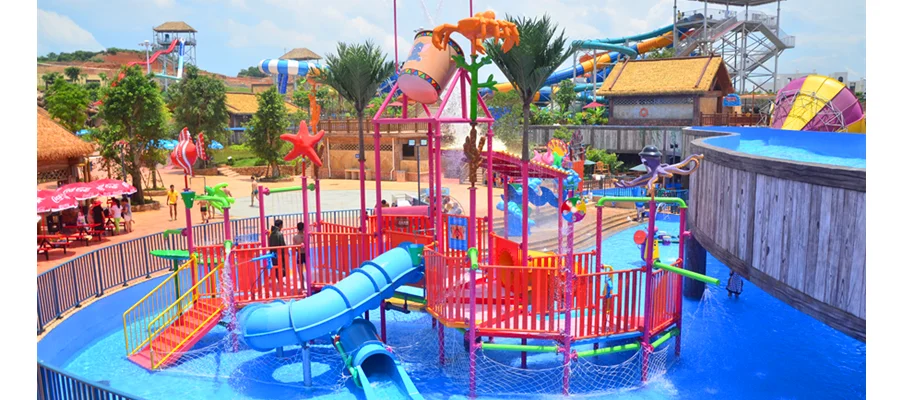
The Middle East represents one of the most dynamic regions for aquatic entertainment development, characterized by rapid tourism expansion and significant capital investment. For resort developers and project investors, successfully navigating this market requires balancing high-capacity entertainment with the realities of an extreme desert climate. As the region pivots toward massive, master-planned destinations, operators are actively seeking infrastructure that supports year-round revenue generation. We observe that capitalizing on this regional growth depends heavily on strategic attraction zoning, resilient material science, and intelligent capacity management. By approaching these complex environments with a focus on sustainable operational design, project developers can better position their facilities for long-term financial resilience and strong market presence.
Capitalizing on Regional Tourism Growth
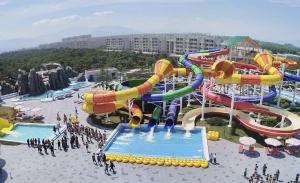
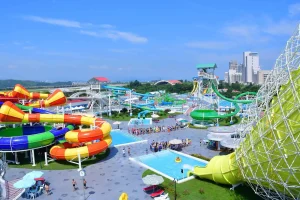
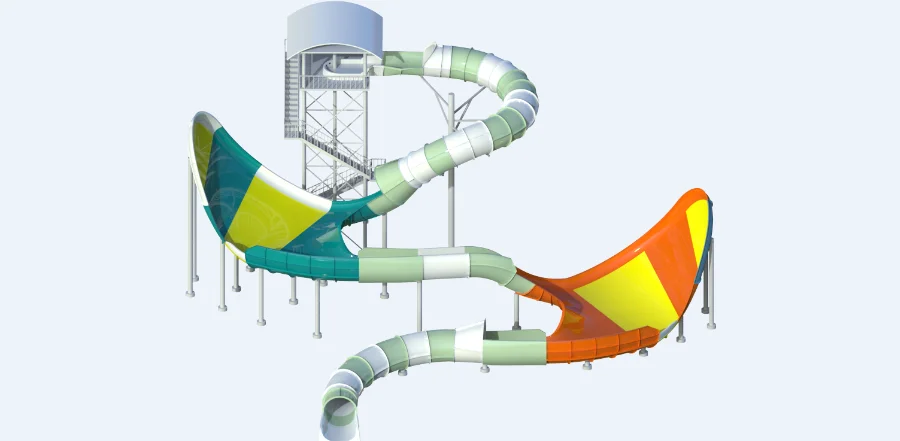
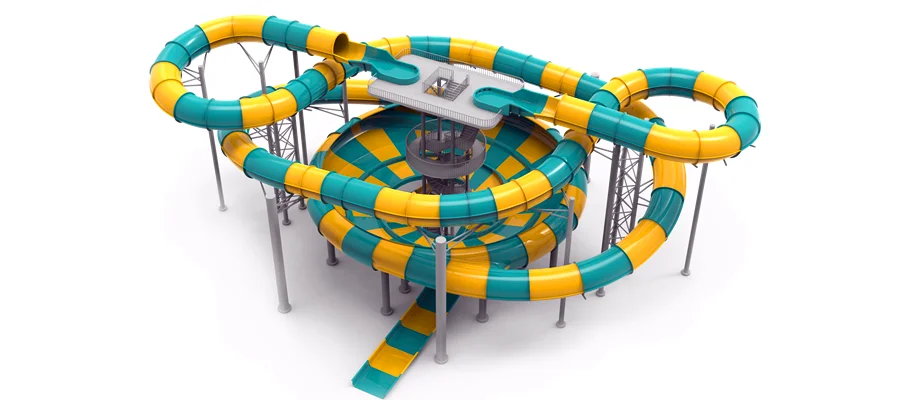
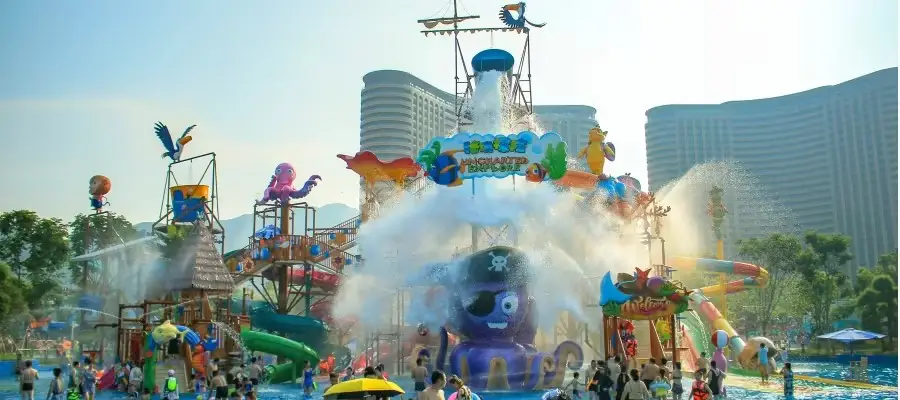
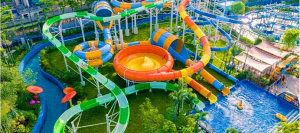
The broader Middle Eastern market is currently undergoing a structural transformation, shifting from localized leisure sites to sprawling, internationally recognized tourism hubs. To capture both regional demographics and international travelers, developers are increasingly deploying capital into high-thrill, visually commanding aquatic landmarks. These massive installations serve as regional anchors, often designed to draw significant gate attendance from neighboring countries and broader international markets.
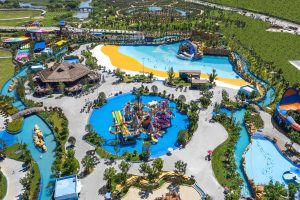
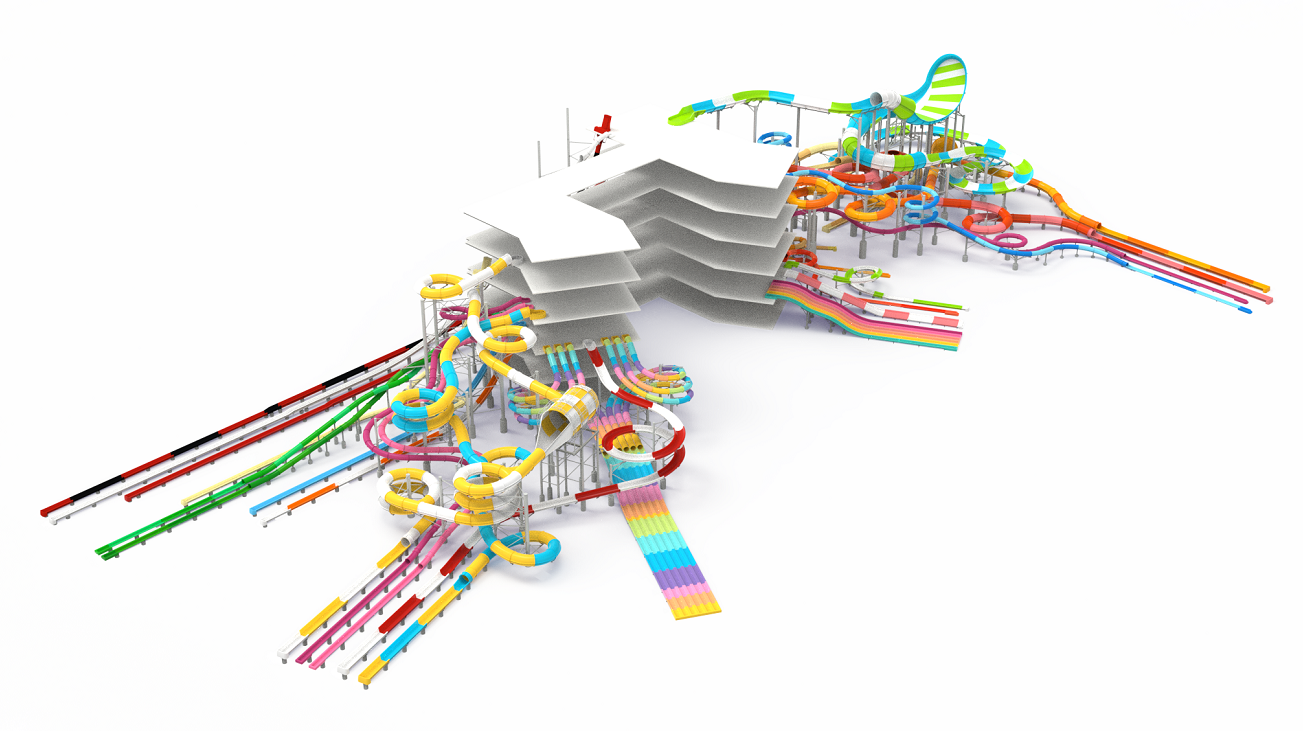
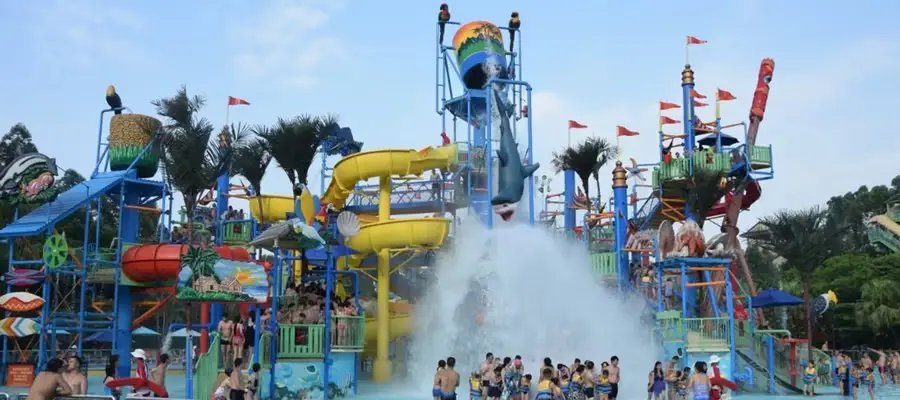
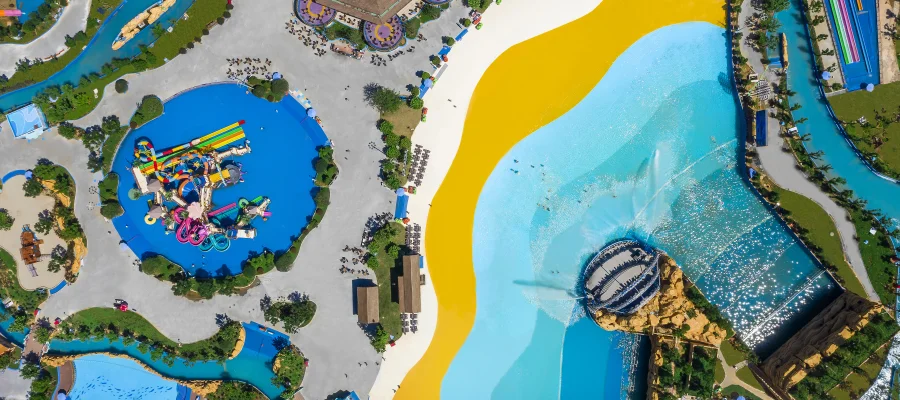
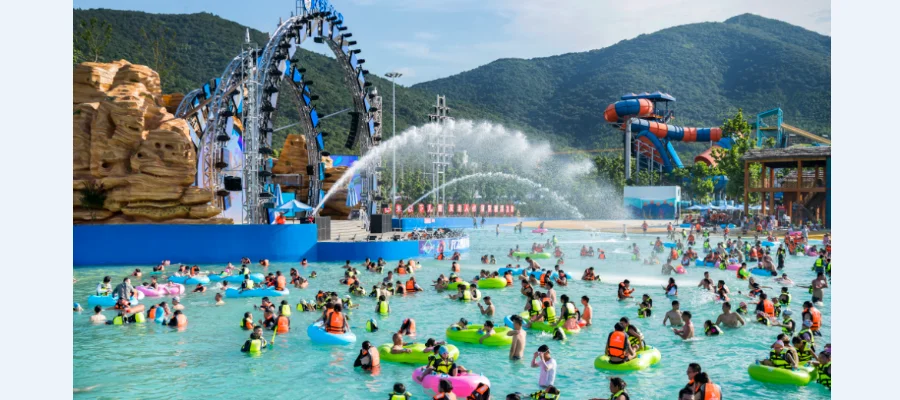
However, succeeding in this highly competitive landscape requires more than just installing standalone attractions. It necessitates a cohesive, whole-park architectural vision. Operating as experienced water park manufacturers, we focus on creating interconnected aquatic ecosystems that can handle immense bather loads. By synchronizing high-capacity wave pools with adjacent premium leisure zones, operators can help manage massive crowd surges during peak holiday seasons. This integrated approach is commonly used to extend guest dwell times and encourage secondary spending across the property.
Overcoming Extreme Climate Challenges
Perhaps the most formidable barrier to entry in the Middle East is the extreme environmental stress placed on outdoor infrastructure. Sustained high temperatures, relentless ultraviolet radiation, and blowing desert sand can rapidly degrade standard fiberglass composites and metal frameworks. To protect large-scale capital investments, operators must prioritize advanced material science from the initial procurement phase to help mitigate long-term structural fatigue.
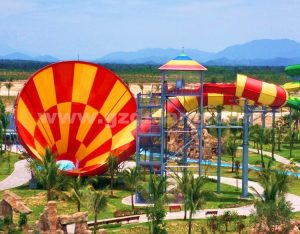
We address these specific environmental challenges by utilizing high-grade isophthalic resins and applying heavy-duty protective gel coats to exposed surfaces. This material strategy is intended to resist severe UV oxidation and thermal expansion, helping to maintain structural integrity and color retention over time. As an established water slide supplier, we understand that mitigating premature material breakdown is critical for lowering variable maintenance overhead. When infrastructure requires fewer mid-season interventions, the overarching operational ROI of the facility often improves.
Strategic Spatial Planning for High-Capacity Venues
Managing extreme heat also dictates how guests move through the physical space of the venue. In desert climates, exposing visitors to long, unshaded transitional walkways or static queue lines can quickly lead to heat exhaustion and diminished guest satisfaction. Therefore, intelligent water park layout design is a fundamental requirement for securing regional success and supporting comfortable daily visitor flow.
Our structural engineering teams strategically plot attraction footprints to maximize natural shading and minimize the distance between high-energy zones and climate-controlled retail or dining hubs. We frequently design extensive, interconnected lazy rivers that act as aquatic transit systems, allowing guests to navigate the sprawling property while remaining comfortably submerged. This focus on spatial optimization helps prevent localized overcrowding and encourages visitors to remain engaged with the park’s revenue-generating centers throughout the hottest parts of the day.
Navigating Complex Infrastructure Integration
Deploying immense structural steel and complex hydraulic networks in remote or rapidly developing regional zones introduces significant logistical hurdles. Traditional poured-in-place concrete methods can suffer from supply chain delays and weather-related work stoppages. To help accelerate project timelines and protect initial budgets, many regional developers are adopting advanced modular fabrication techniques.
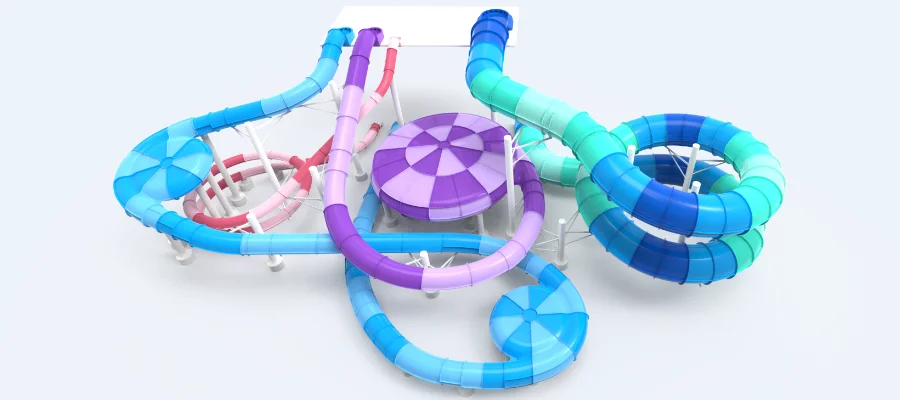
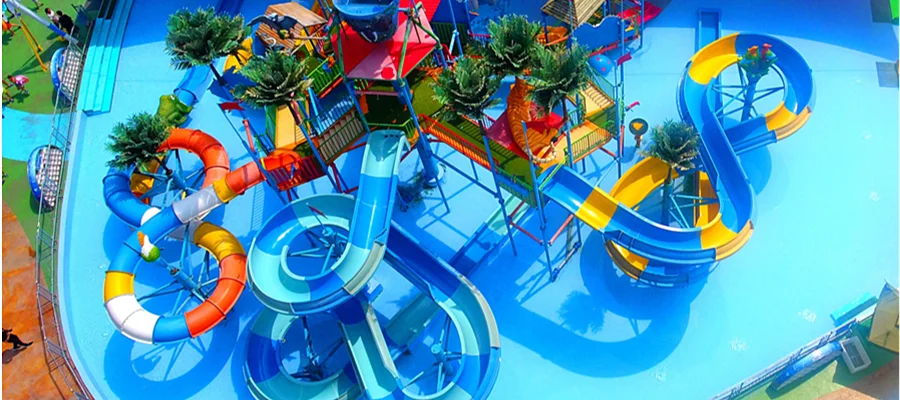
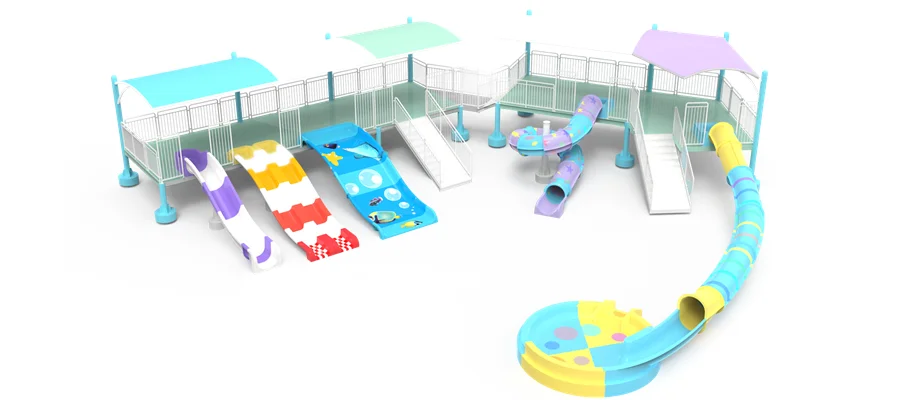
By engineering structural columns and fiberglass flumes for rapid on-site assembly, the complexities associated with large-scale aqua park construction can be actively managed. This customized modular approach allows heavy-duty pumping systems and centralized water filtration grids to be integrated surgically into the property. Consequently, installation teams can interface complex variable frequency drives without disrupting concurrent development zones, which often supports a more efficient build schedule and reduces on-site labor expenditures.
Securing Long-Term Asset Protection
The operational realities of the Middle Eastern market dictate that the relationship between a developer and their technical partner must endure long after the initial opening. Maintaining continuous, high-volume throughput requires an ongoing commitment to preventative maintenance and rapid remote diagnostics. Facilities encumbered by outdated mechanical networks may face severe operational friction when competing against newer, highly optimized mega-resorts.
To support sustained asset performance, we supply rigorous operational training parameters and detailed preventative maintenance archives to our regional B2B partners. By selecting Dalang as a strategic engineering resource, developers leverage decades of experience in balancing high-thrill aquatic experiences with responsible operational design. We view every Middle Eastern installation as an opportunity to support the continuous financial evolution of the regional entertainment industry, helping operators navigate complex environmental challenges while working toward stable, long-term profitability goals.