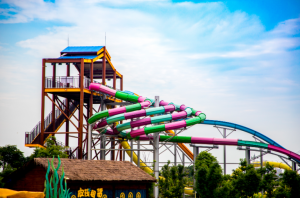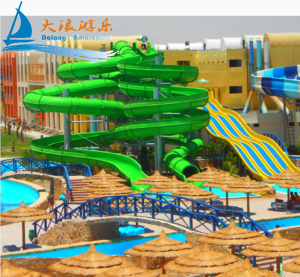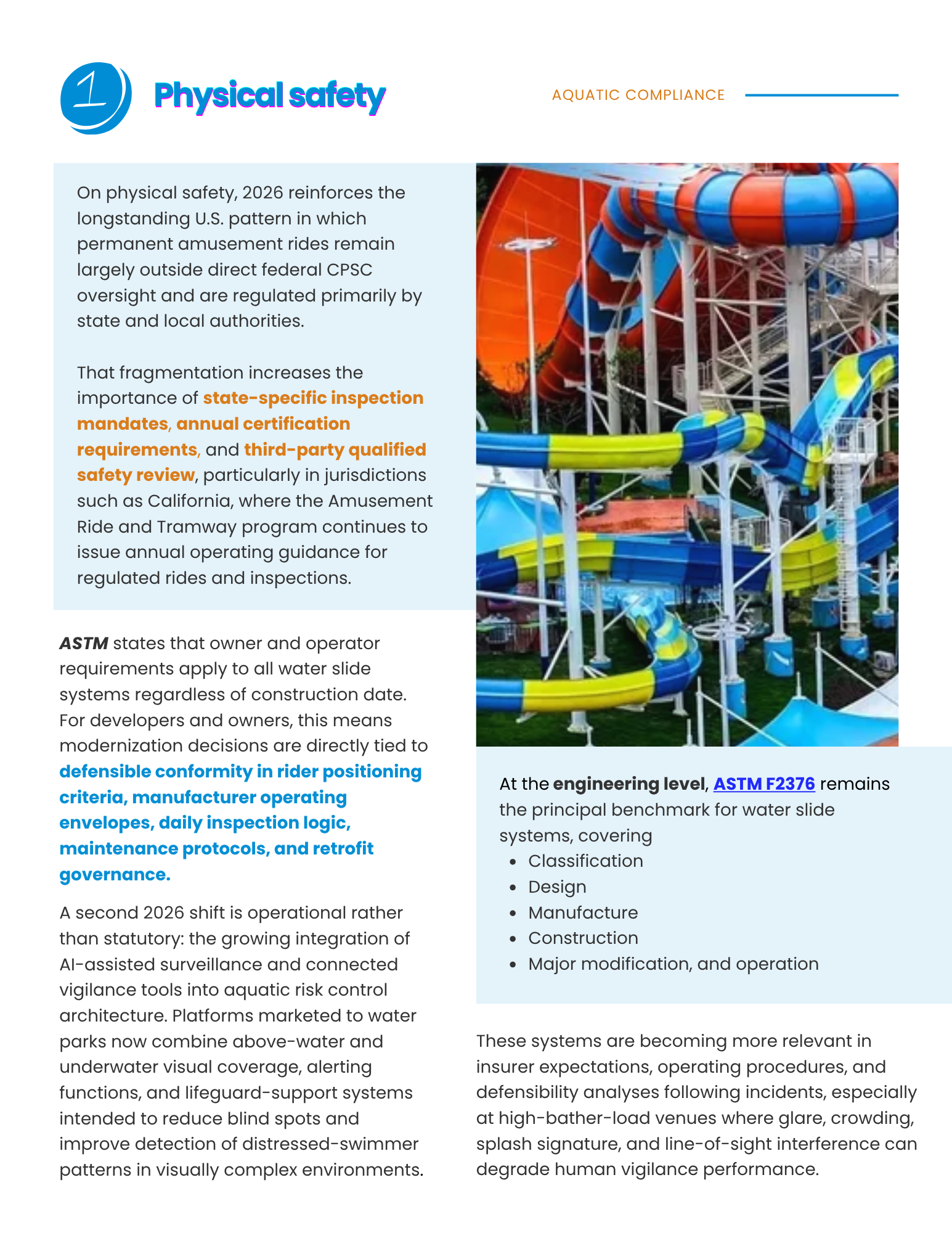
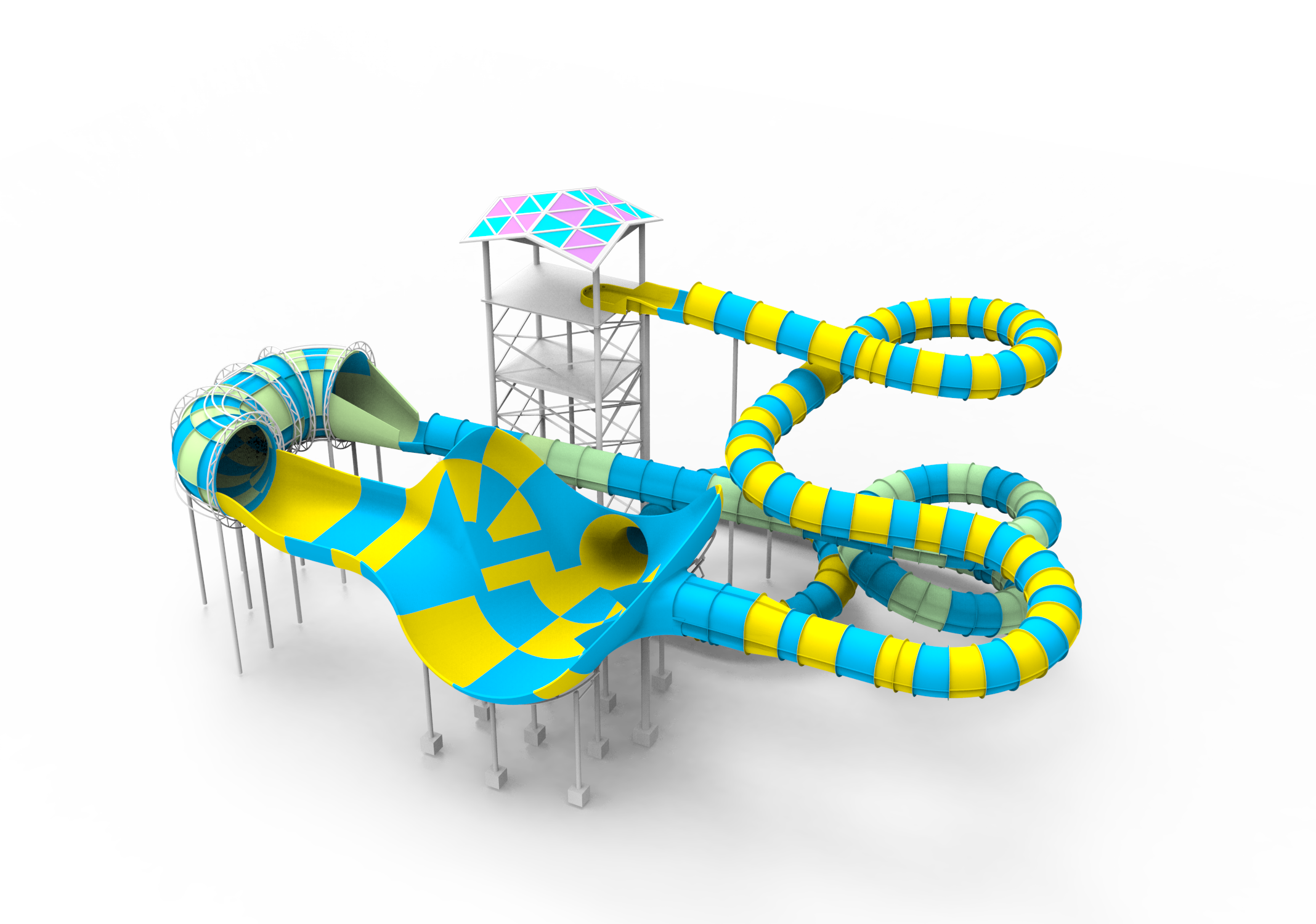
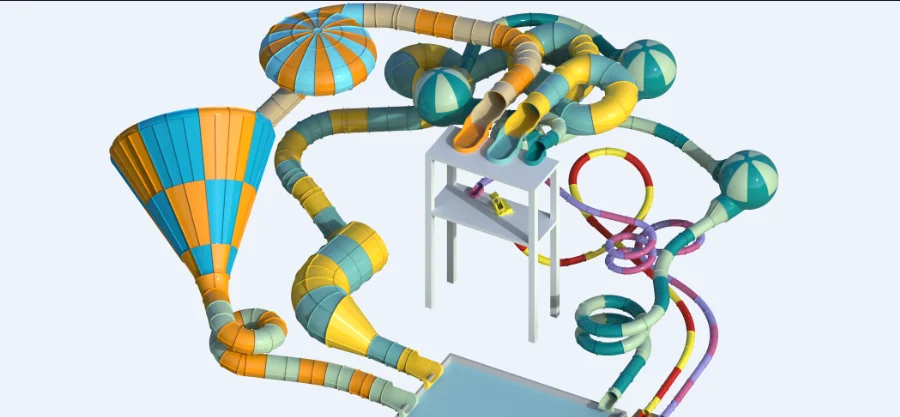
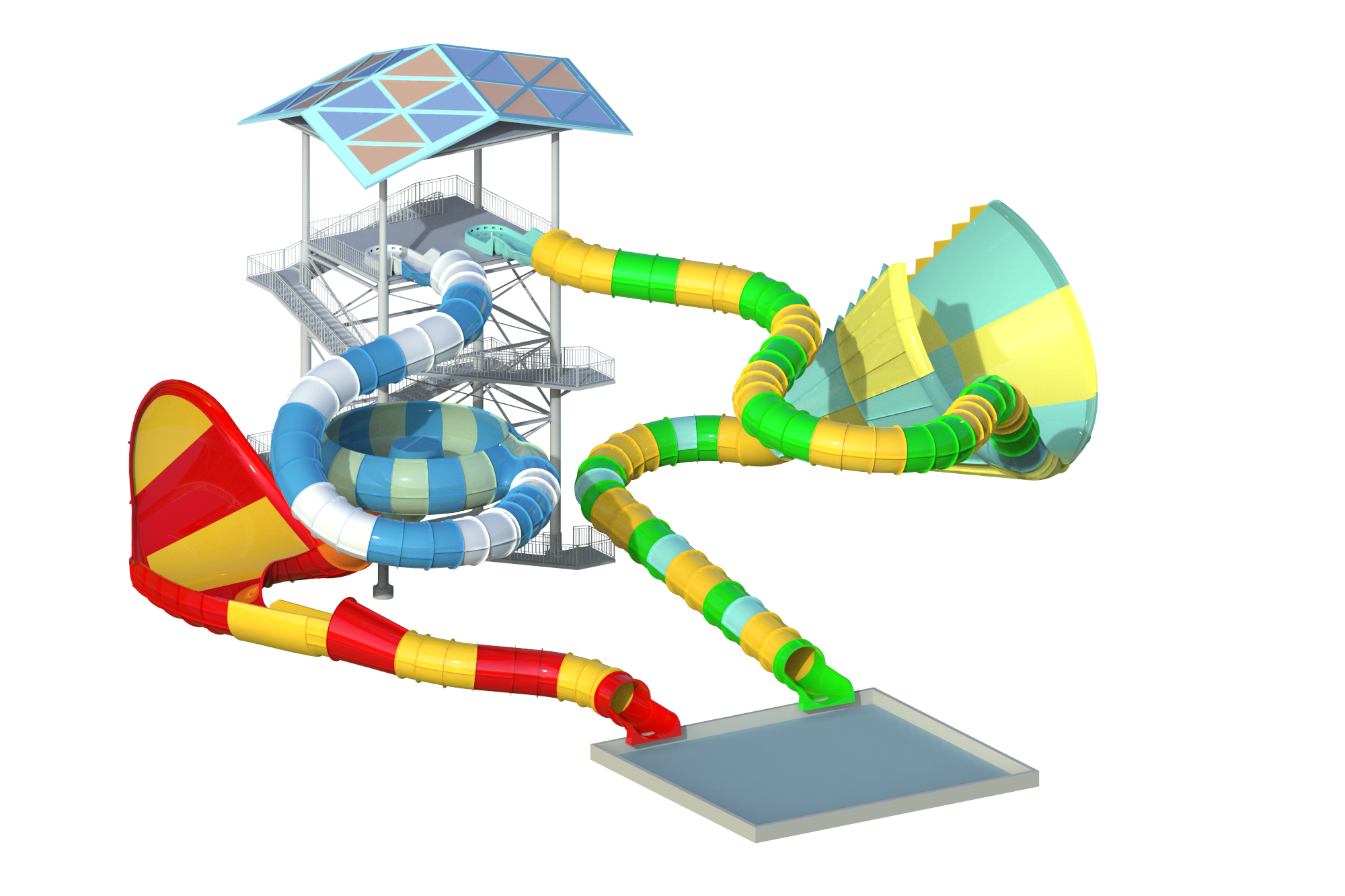
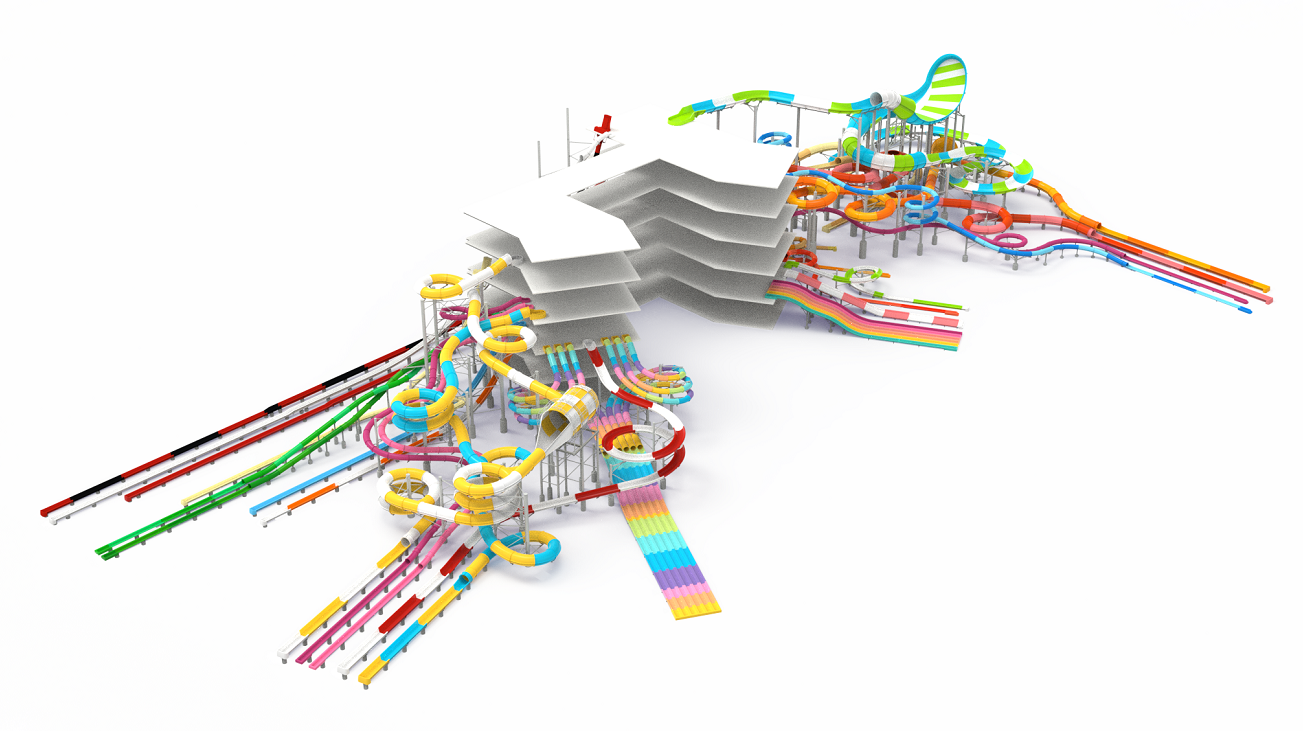
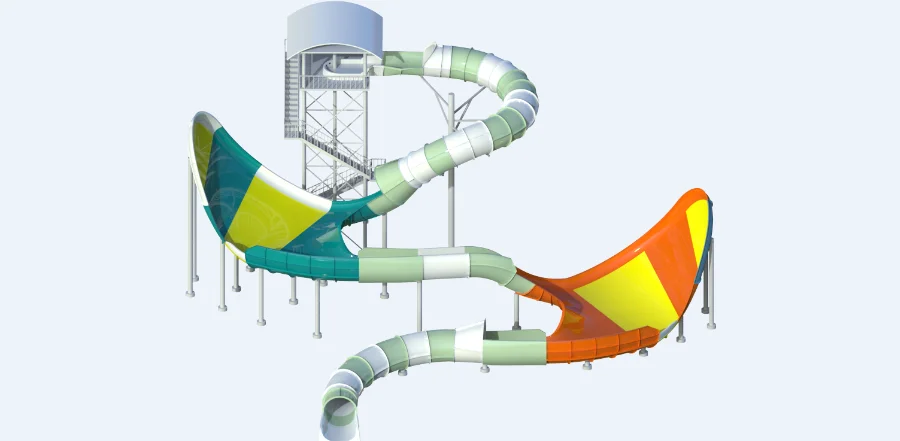
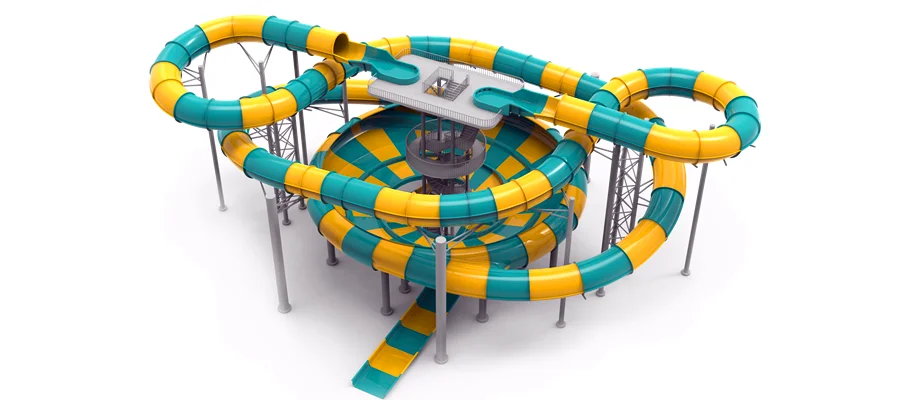
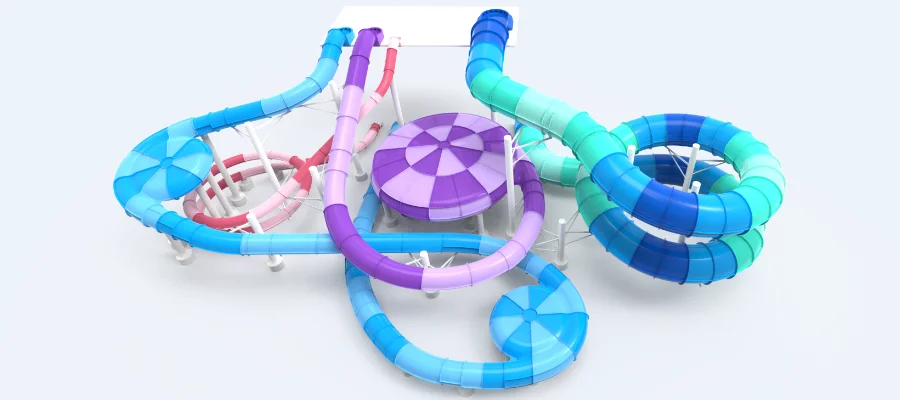
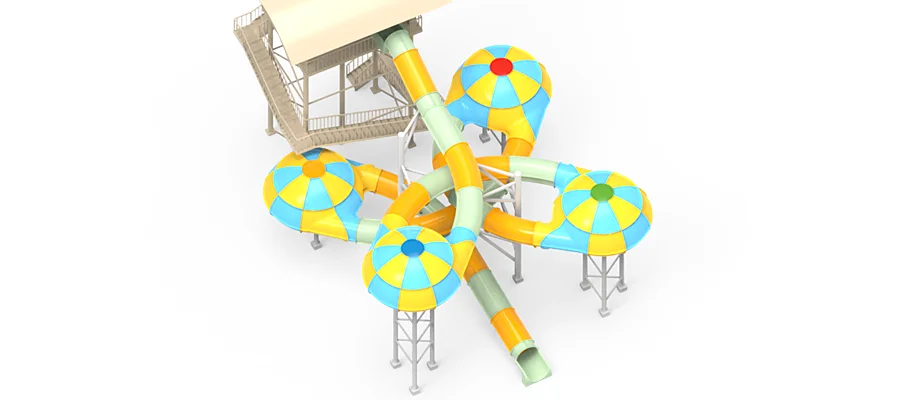
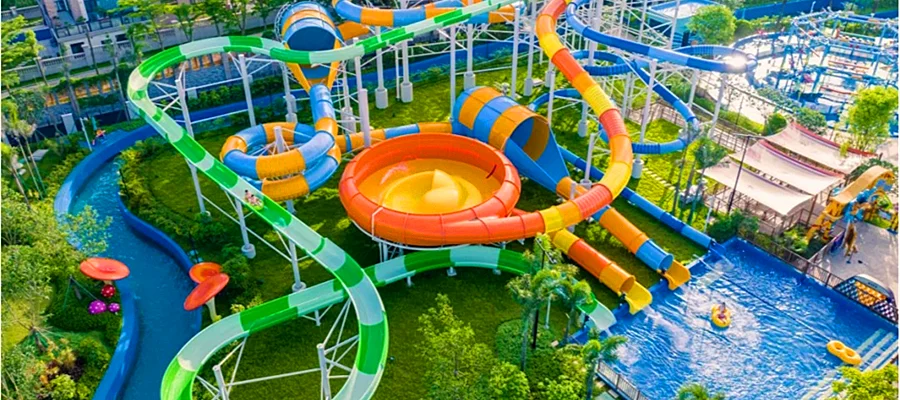
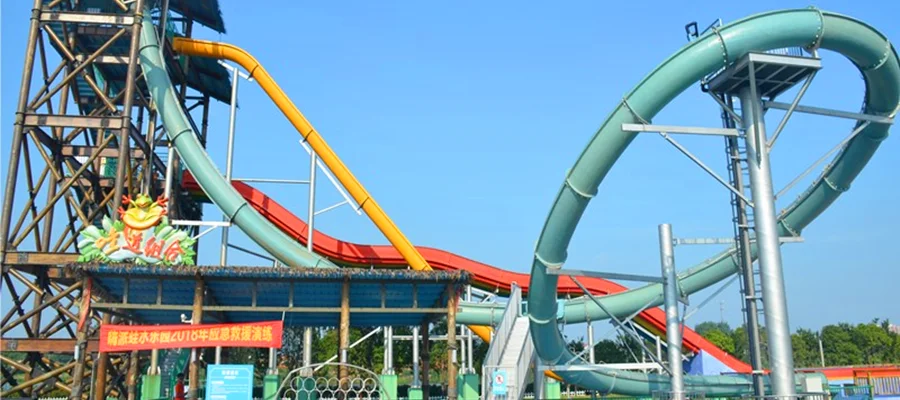
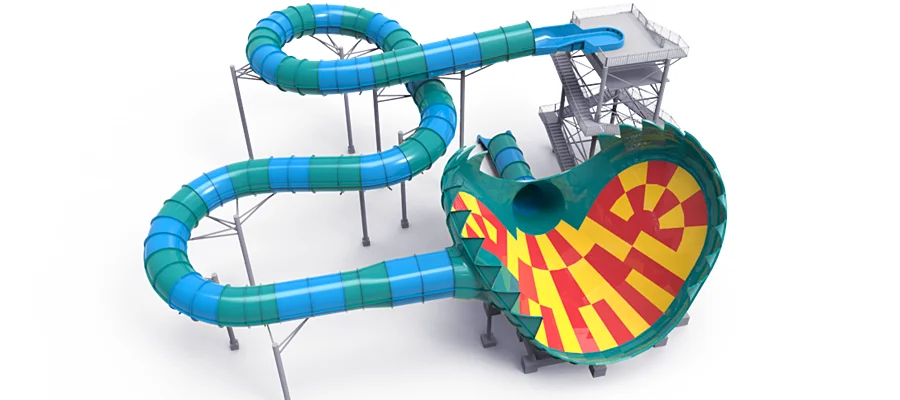
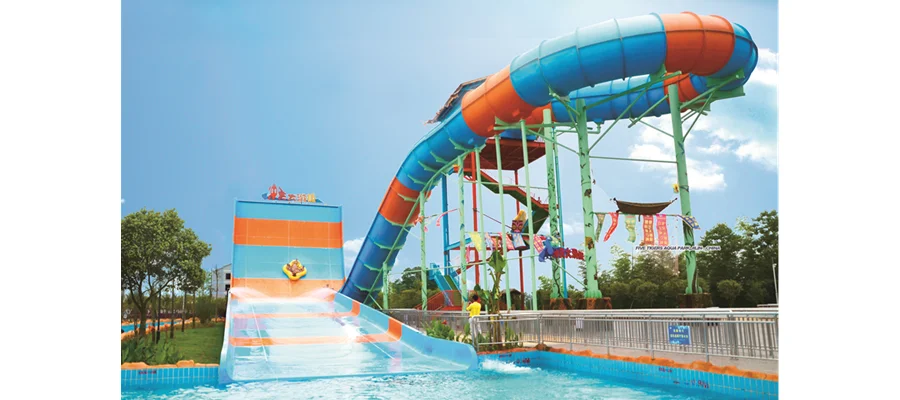
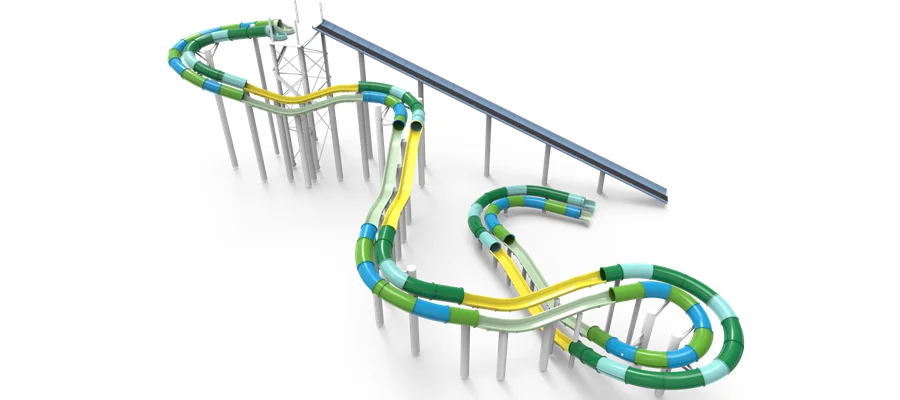
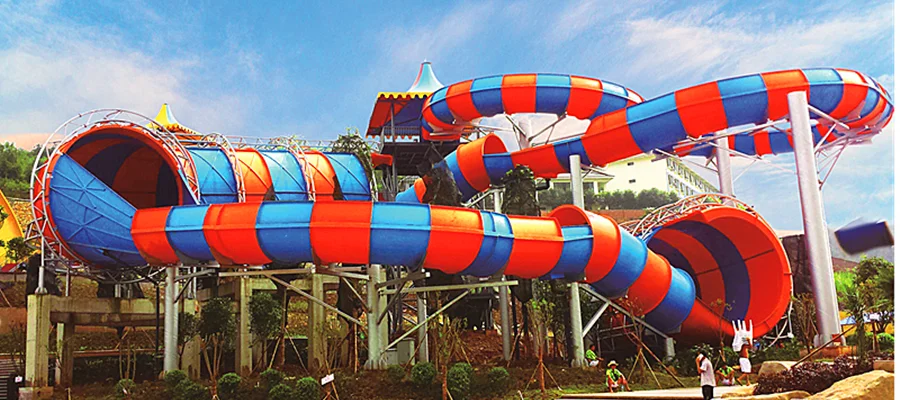
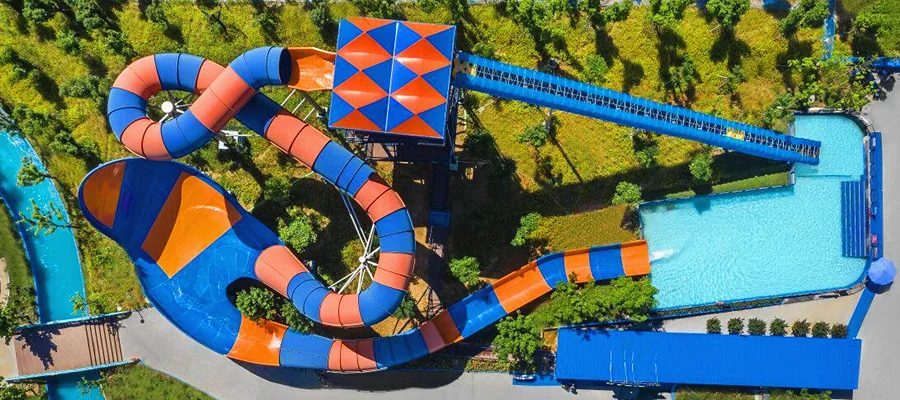
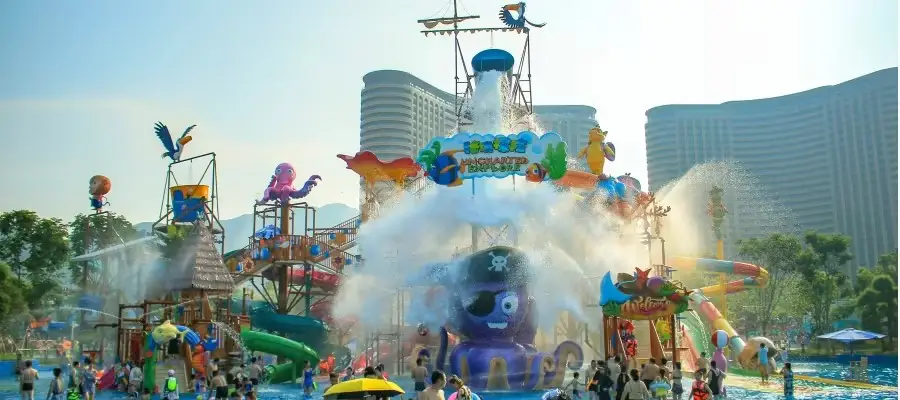
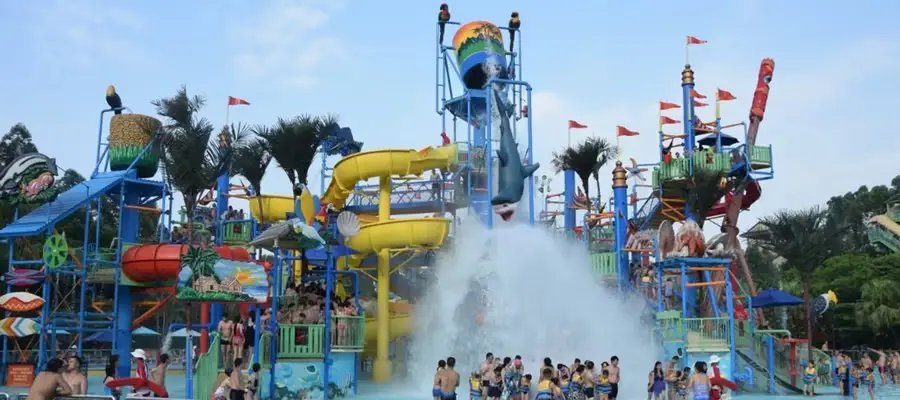
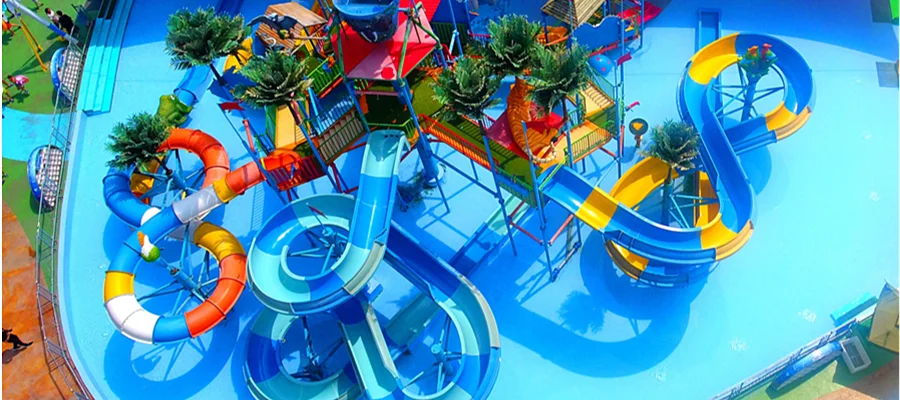
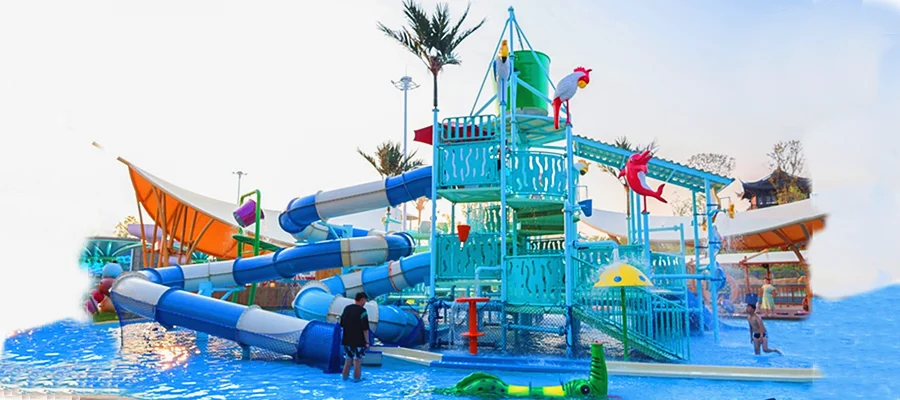
Let us walk you through a real repair call from two years ago. A large indoor water park in central China called us about a speed slide that had developed hairline cracks along the joint seams after only four peak seasons. The park averaged 3,800 riders daily on that slide. The fiberglass looked fine from a distance, but our dye penetrant test revealed a network of micro-fractures spreading from the resin-rich areas near the flanges. That slide did not fail suddenly. It wore down one load cycle at a time. For any water park slide equipment expected to handle thousands of riders every operating day, fatigue life is not an abstract engineering number. It is the difference between a fifteen-year asset and a five-year liability. This article breaks down the real factors that determine how long a slide lasts under constant commercial traffic.
How Fiberglass Reacts to Repeated Rider Loads
Every rider sends a stress wave through the water park slide equipment. A typical 75 kg rider hitting a curve generates roughly 2.5 times their body weight in centrifugal force. Multiply that by 1,500 riders per day. Within three years, a busy slide experiences over one million load cycles in the same curve section. Fiberglass reinforced plastic handles these cycles well when the fiber orientation matches the load direction. But when the angle between fibers and stress reaches 45 degrees, the interface between fiber and resin becomes the weak link. Academic research confirms that water accelerates this process. Water molecules penetrate through micro-defects, causing the resin to swell and fiber-resin bonding to weaken. Studies show that after 230 days of water exposure, the fatigue life of fiberglass samples dropped to about 66% compared to dry samples under the same stress level. For professional water slides installed in tropical or subtropical climates, this means the material is degrading from the inside while handling daily traffic. At Dalang, we have switched to multi-axial fiber layups specifically designed to distribute loads more evenly across different stress angles. Our slide combos include documented fiber orientation maps matched to the specific curves of each slide because a generic layup will fail much sooner than a directionally optimized one.
How Water Chemistry and Temperature Fluctuations Attack the Material
Water does more than carry riders. It chemically interacts with the resin over time. Chlorinated pool water, which typically runs at 2 to 4 parts per million free chlorine, gradually breaks down the molecular chains in polyester and vinylester resins. The effect accelerates when water temperature exceeds 30 degrees Celsius, which is common in indoor parks and tropical outdoor facilities. Higher water temperatures increase diffusion rates, meaning chemicals penetrate deeper into the laminate. One of the clearest indicators of this type of degradation is a phenomenon called whitening. When the interface between fiber and resin begins to fail under repeated loading in a wet environment, the affected areas turn opaque or white under stress. Regular water slide manufacturer inspections can catch this early if the maintenance team knows what to look for. We have trained our clients to use a simple handheld magnifier with a built-in light to scan high-stress zones before each season. Additionally, thermal cycling—going from hot daytime operation to cooler nighttime temperatures—creates differential expansion between the resin and the glass fibers. Over hundreds of cycles, micro-cracks form at the interface, reducing the structural integrity of the professional water slides. There is no magic coating that stops this entirely. That is why our supply packages always pair the slide with a resin-compatible sealant and a scheduled inspection protocol. The sealant alone is not enough. The inspection alone is not enough. The whole system works together.
The Hidden Threat of Freeze-Thaw Cycles and Winter Neglect
This factor surprises many operators in temperate climates. A slide that operates perfectly for ten months of the year can lose significant fatigue life during just two months of improper winter storage. When water seeps into microscopic cracks or under flanges and then freezes, it expands by roughly 9%. That expansion forces the crack wider. When the ice melts, the crack does not close completely. Each winter adds measurable permanent damage. Research on fiber-reinforced polymer composites confirms that exposure to freezing temperatures increases resin embrittlement. The material becomes stiffer but less tolerant to impact and cyclic loading. For a water slide manufacturer, specifying a resin system with higher fracture toughness at low temperatures becomes crucial for parks in regions where temperatures drop below freezing. We have seen slides that received full winterization—complete draining, desiccant packs inside enclosed sections, covers to prevent snow loading—last more than twice as long as slides left exposed. Freeze-damaged slides rarely show obvious cracks immediately. Instead, they fail earlier during the following operational season because the internal structure has already been compromised. In our winterization combo packages, we include a freeze-thaw risk assessment for the specific installation site, recommending whether a full drain and dry procedure is sufficient or if climate-controlled storage is necessary. A slide stored correctly every winter will outlast a neglected slide by years, even with identical daily rider counts.
Fatigue life for water park slide equipment is not a fixed number stamped on a product datasheet. It depends on fiber orientation relative to real loads, the chemical interaction between water chemistry and resin, the frequency of thermal cycles, and how the equipment is treated during winter months. Any water slide manufacturer promising a thirty-year lifespan without showing the fiber layup schedule, the resin formulation, and the winterization requirements is skipping the hard questions. At Dalang, we have learned that the best slide is the one that comes with a complete system. That is why we sell our professional water slides only in combinations that include documented fiber orientation maps, resin compatibility charts, sealant applicators, winterization checklists, and inspection training for the onsite team. A slide is not a standalone product. It is a system that needs proper support from the first ride to the last.